anxiety

Prism creating rainbow heart on paper.

When one way of understanding your pain isn’t enough, consider looking through healing lenses for a different perspective.

Sometimes life cracks your world wide open.
A loss. A tragedy in the news. A violent act that leaves you trembling.

A modern living room with a white sectional sofa and large windows.

In moments like these, you may find yourself asking, “Why? How do I even begin to make sense of this?”
You might swing between rage and grief, numbness and confusion, trying to grab hold of something steady.

What I’ve learned is this:
There isn’t just one right way to understand pain.
Sometimes, the most healing thing you can do is to let yourself look through many different lenses–not to deny what happened, but to find enough light to keep going.

The Spiritual Lenses

For some people, comfort begins with faith.

  • Through the eyes of Jesus, you might hear: “Blessed are those who mourn, for they shall be comforted.” His words offer tenderness and the reminder that love and forgiveness are stronger than hatred.
  • Through the eyes of the Buddha, you might hear: “Hatred never ends hatred. Only love can do that.” Instead of feeding rage, he invites you to place it down gently, like a burning coal.
  • Through the eyes of Rumi, the poet, you might hear: “The wound is the place where the Light enters you.” Your heartbreak doesn’t mean you are broken – it means your heart is still deeply alive.
  • And sometimes, it’s the voice of the Divine Mother – Mary, Quan Yin, Tara – that you need most: “Cry. Rage. Collapse in my arms if you must. I will hold you.”

These voices don’t erase the pain.
They simply whisper that you don’t have to carry it alone.

The Philosophical Lenses

Others find comfort in clarity rather than comfort.

  • Nietzsche said: “Beware that, when fighting monsters, you yourself do not become a monster.” Rage can be tempting, but if you hold it too long, it can hollow you out.
  • The Stoics remind us: “You can’t control what others do. You can only choose who you will be.”
  • Existentialists like Camus say: life doesn’t always make sense, but we can still choose love, beauty, and courage in the middle of the chaos.

These perspectives don’t tell you everything will be okay.
They remind you that even when it’s not okay, you still have power over who you become.

The Emotional / Trauma Lens

Sometimes the most helpful thing is simply understanding what your body is doing.

Rage, grief, and numbness are not signs that you’re “doing it wrong.”
They are normal nervous system responses to shock and danger.

Your body might be trying to protect you with fight, flight, freeze, or collapse.
That’s not weakness – that’s biology.

Through this lens, healing begins with safety, grounding, and compassion for yourself.
Breath. Warmth. Gentle routines. Calming your body enough that your heart can even begin to heal.

The Ancestral and Cultural Lenses

In many traditions, a sudden death or act of violence isn’t seen as just an individual wound – it’s seen as a tear in the fabric of the whole community.

The response isn’t “get over it,” but gather together.
Tell stories. Light candles. Cook food. Weep.
Remember the one who was lost.

This lens reminds us:
You don’t have to carry this pain alone.
You are part of something larger and older than this moment.

The Feminine / Mothering Lens

Sometimes, you don’t need perspective at all.
You just need comfort.

This lens says: “You don’t have to rise above this yet. You just need someone to hold you while you fall apart.”

It might look like soft blankets. Soup on the stove. A friend’s voice on the phone.
Not fixing – just holding.

This kind of love doesn’t ask you to be strong.
It lets you be human.

The Activist / Purpose Lens

Some people only find their way through pain by doing something with it.

  • Speaking up.
  • Protecting someone else.
  • Volunteering.
  • Creating beauty where there was harm.

This lens says: “I can’t undo what happened, but I can grow something good from this ground.”

It turns anguish into action – not to erase the pain, but to give it meaning.

A Real Example

One woman I worked with had witnessed a sudden, violent act. She was drowning in anger.

“I know I’m supposed to be compassionate,” she said, “but all I feel is fire. If I let go of the anger, I’m afraid it will mean what happened didn’t matter.”

We started by understanding her rage as a trauma response, not a character flaw.
Once her body felt safe, she could finally let the tears come.

Then, she found peace in Jesus’ promise that those who mourn will be comforted.
She softened her fury through the Buddhist view that hatred only creates more suffering.
She reclaimed her power with the Stoic reminder that she still had choice over who she wanted to be.
And finally, she found healing by stepping into the activist lens, quietly mentoring at-risk teens so someone else might be spared that kind of pain.

None of those lenses alone would have been enough.
But together, they gave her room to breathe – and eventually, to heal.

Why Many Lenses Help

Here’s the truth:
No single way of seeing can hold all of your pain.

When you only have one explanation – one lens – it can crack under the weight of what you’re feeling.
But when you gently move between lenses, something opens.

It’s like walking around a sculpture in a museum.
From one side, you see grief.
Yet, from another, courage.
Still from another, love.

Each view shows something the others cannot.

That movement – that willingness to see differently – is how the mind and heart begin to loosen their grip on despair.

If You Are in the Dark Right Now

If you are carrying heartbreak today, here is what I want you to know:

  • You are not weak for feeling anger or grief.
  • You do not have to “choose just one” way to heal.
  • You can hold your pain like a prism, turning it gently in the light.
  • On some days, faith might help.
  • On others, reason might steady you.
  • On still others, you might need a soft blanket and someone who won’t ask you to be strong at all.

All of it is allowed.
All of it can be part of your healing.

Closing

Grief can make the world go dark.
Rage can make it burn.

But shifting the lens–even slightly–can let the light back in.

You don’t have to find the answer right now.
Just find a lens that helps you breathe for this moment.
And then, when you’re ready, another.

Your healing is not in one answer – it’s in the freedom to see your pain through many eyes, until one of them shows you peace.

If your heart is heavy right now, you don’t have to carry it alone.
When you’re ready, reach out. Together we can explore the many lenses that can help you heal.

To begin your healing journey call: 727-215-0283

walks in the park

This is my story, maybe it will help inspire you, maybe it won’t. What I am not going to do is tell you how you should be dealing with the quarantine. There are plenty of experts who are offering advice. Also,there are a ton of talking heads stirring up your worst fears and then offering ways to calm them down again, until the next headline. Furthermore, there are too many Hollywood stars doling out admonitions from the comfort of their spacious mansions, creating a resentment from their fan base. I am simply going to share what has worked for me and kept my spirits up.

We started early in the quarantine as my husband’s company decided to start work from home (WFH) almost immediately and why not? The company has the technology to do so. This created a change in my living and working as I was already WFH, however, that included most of my clients coming to see me in my home office. Because my husband and I are no spring chickens and because he has a history of heart concerns, we decided that I needed to move towards online work, via Zoom or Facebook Portal or other means.

Initially, I kept busy

with my clients as my schedule always has been, just done exclusively by remote. Then I noticed the palpable fear of the medical professionals and so I added free sessions to anyone in the field. That has taken over a good number of my sessions. I trust that I will be able to get back to a more balanced schedule soon enough, in the meanwhile this is my way of paying it forward.

I like structure in my life. For me, this means I have continued with a routine. Awakening early every morning to walk the dogs and feed them, followed by my normal schedule of cleaning my home and exercise for my body. Next, I ablute and once dressed, head downstairs to my office. If I have sessions scheduled, I begin with those. Otherwise I am working on paperwork and all the background stuff that I do to keep in business.

Downtime

There is more downtime simply by the nature of this quarantine. That is where it has become particularly important that I use it well. By that, I mean find ways to nurture me. Today, I overheard the backyard neighbors’ little children shrieking with delight as they ran through the water sprinkler. I moved my laptop out to my back porch so I could enjoy the unfettered joy. With my husband home that has given me cherished “water cooler time”. That is time to take a break and just talk about nothing in particular. At the end of our workday, we walk through the park with our dogs. We are in almost total isolation, enjoying the sights and sounds of nature.

I have taken the time to learn new recipes, nothing earth shattering mind you. Still I discovered that enchilada sauce doesn’t have to come from a can. And egg drop soup is relatively easy to make. Claiming a shortage in the meat department, I have even included more plant-based meals into our diet. He is enjoying them!

Although I am unable to physically visit with my sons and their partners, we are fortunate to have the Facebook Portal. Therfore, we have held family happy hours and chat sessions. Most of that time is spent in gales of laughter, just like the old days around our dinner table. Speaking of dinner, we are having our food and supplies delivered. Without the distraction of shiny displays I am saving money! In support of local businesses, we get take-out a few meals a week.

I have had projects waiting for me to have free time. Some of them will still wait, I guess they weren’t a priority. Others, such as going through old photos and scaling back the quantity has given me the gift of recalling some wonderful memories. My plants are happy with the attention given to them now, just like some of my friendships. It is fun exchanging funny memes and thoughts and inspirations with friends and loved ones. It helps me to look for and read what feeds my soul. Selfishly, I am enjoying all the time I have with my husband.

What I am not doing

is overdosing on news. I watch enough to be aware, not so much as to ride the roller coaster that media would provide. Nor am I joining in negativity and trash talking; whether it is social media, texts or phone calls. If a dark moment seems to encroach on my mind or my soul, I do self-hypnosis or meditate. Using the other tools in my toolkit to reframe that moment as well. I am doing my best not to judge anyone else for how they are reacting to this quarantine, no one needs or wants my opinion anyway. Let me note, I refuse to feel guilty if I don’t behave perfectly, these are imperfect times.

Just as I started this, this is my story, it is not meant to “should” on you. I hope it may inspire you. If you have ways of coping that will inspire me, please share! I am always open to new ideas.

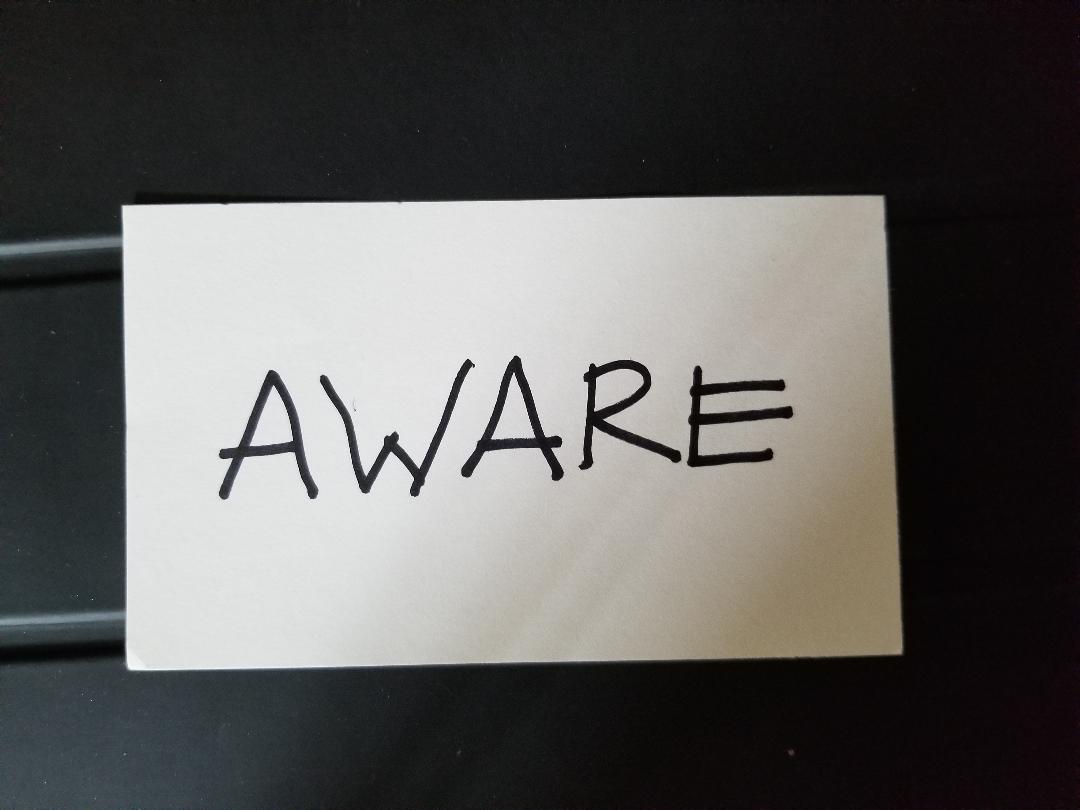
Card with the word "AWARE" written.


There are times that anyone may experience anxiety. Before making a life changing decision, taking an important test or upon hearing unexpected news. Usually, those feelings pass, they are temporary. However, for the person diagnosed with Anxiety Disorder it can build and continue until it interferes with daily activities.

A modern living room with a white sectional sofa and large windows.

WhileI don’t diagnose, I frequently get referrals from doctors who have patients with Anxiety Disorder that are looking for relief. Hypnosis has proven to be very effective in helping reduce the stress levels and help to reset thoughts. I often record the trance portion of our session to help my client reinforce the new feelings after we have met.

I am always looking for new tools to help in the diminishing of stress and anxiety. So, much to my delight a new tool found a way into my toolbox and I really want to share it. I asked a beautiful young friend of mine who deals with anxiety to give me 3 words for it. She instantly responded with suffocating, tense and nervous. What she didn’t know was, she was already using the first step of the new tool. She has used some of the other steps as well in the past. This is simply a lovely way to put them into a quick simple practice.

Right now, if you are suffering from anxiety, pull out an index card and write the word AWARE on it. Aware is an acronym for Accept, Watch, Act Normal, Repeat and Expect. Allow me to explain.

Accept: accept that you are feeling the anxiety and go a step further to name it. Yes, use as many creative words as you can to give it a name. According to a 2015 study1 putting feelings into words can reduce the physiological symptoms of anxiety.

Watch: watch the anxiety. Observe it as if it was something you could rate, give it a number on a scale of 1 – 10. Just by doing that you have removed some of the attachment you might have to the sensations. It is now a number instead of a state. Then take a few slow deep breathes and notice if the number changes. (Frequently it will go down a number or two.)

Act Normal: Take some slow deep breathes, making sure that the exhale is longer than the inhale. (i.e. in to the count of 4, hold to the count of 4 and release to the count of 8.) If you are speaking, calm your speech down as well. Keep your attention on the breathes or the moment you are speaking about. Think about your surroundings instead of your worries.

Repeat: Simply repeat the first 3 steps as needed.

Expect: Expect the best results as that is what you deserve!

By pulling out the card and reminding yourself to use those steps you can redirect your “awareness” from feeling uncomfortable to feeling peaceful. Ironically, the sensations we feel during anxiety are often the same sensations we feel when excited (think the night before your birthday or another big holiday as a kid) and when exercising. Heart pounding, gasping breathes, sweaty palms and shaking can all happen when you are excited or heavily exerting yourself, yet you don’t think of that as an attack. So maybe panic attacks are simply mislabeled physiological occurrences that we tie to negative thoughts.

Once the moment has passed, it is time to move on to keeping that old anxiety away. According to Dr. Daniel Amen, who has written several books on the brain2 daily elevated heart rate (such as walking briskly) improves the heart, the brain and your mood! Therefore, daily exercise such as a taking that brisk walk or dancing around your house will help keep those tigers away.

While fear and anxiety may have a rightful place on occasion, it does not have to control you. Use these tips along with a little hypnosis and take back your thoughts and your joy!


  1. https://www.sciencedirect.com/science/article/pii/S0005796715000431
  2. https://www.brainmdhealth.com/education/media/books?utm_campaign=BMD+-+Branded+-+Books&utm_source=AdWords&utm_medium=Paidsearch&utm_kmkw=daniel+amen+books&gclid=CjwKCAjw-8nbBRBnEiwAqWt1zULDpMWpZ6Fj1A9Wal9zmUiVOW-J7FTmkoz3Tl_u7F2aqpgxos0akBoCb8QQAvD_BwE


Two cigarettes with a warning: Don't think about smoking.

More and more, I see the hashtag #FirstWorldProblems used as a humorous commentary on modern life. It’s often meant to remind us that those of us living in Western societies have it relatively easy.

Examples abound:

  • A possible infection, another root canal, and the removal of two wisdom teeth — shaping up to be a fabulous summer. #FirstWorldProblems

  • I received new honors from my college, so now all my printed resumes are useless. #FirstWorldProblems

Worrying about which job offer to take may seem trivial compared to someone wondering whether they will survive another week or feed their family. And yet, perspective alone doesn’t always relieve suffering.

Why Comparing Pain Doesn’t Help

When we face real hardship, we often wonder how we ever got so worked up about what once felt like major problems. In hindsight, it can seem like wasted worry — time that could have been spent enjoying life.

However, when someone responds to our distress with “there are people who have it much worse than you,” it often feels dismissive rather than comforting. Many of us remember being told as children to be grateful for food we disliked because children elsewhere were starving. That didn’t inspire gratitude — it inspired guilt.

I once heard a therapist tell a client that because people in war-torn countries have “real problems,” she should be grateful that her husband leaving her with small children was all she had to face. Rather than comfort, that likely left the client feeling guilty, terrified, hurt, and unseen.

Awareness of global suffering doesn’t invalidate personal pain — because we live our lives where we are.

Fear Is Fear — Regardless of Circumstances

Fear, anxiety, and hopelessness do correlate with life circumstances — but only up to a point. Living in a safe environment increases feelings of security, but the relationship isn’t exact.

Fear is fear.

Whether someone is afraid of starvation or afraid of riding an elevator to work, the nervous system reacts the same way. A person living in an outwardly secure environment can still feel deeply unsafe inside.

Research supports this. Studies show that only about 10% of our happiness comes from external circumstances. The remaining 90% is shaped by our inner environment — our thoughts, interpretations, habits, and emotional patterns.

The Case for Practicing Gratitude

This is where practicing gratitude for happiness becomes meaningful — not as a way to dismiss pain, but as a way to shift inner awareness.

Across history, philosophers, spiritual teachers, and religious traditions have emphasized gratitude. Research now confirms what they intuited:

People who practice gratitude regularly experience:

  • Increased optimism, enthusiasm, and energy

  • Lower levels of depression

  • Improved immune function

  • Better sleep and more exercise

  • Greater progress toward personal goals

  • Stronger feelings of being loved and respected

Gratitude isn’t denial — it’s attention training.

Gratitude Without Comparison

Rather than focusing on how others have it worse, it’s more effective to consciously notice what you have.

Gratitude works best when it is non-comparative. Comparing yourself upward (she got the promotion and I didn’t) breeds resentment. Comparing yourself downward (others have it worse) breeds guilt.

Instead, focus on your own blessings.

A Simple Gratitude Practice That Actually Helps

The next time you feel worried or discouraged, try this:

  1. Think of three ways your situation could be worse for you — but isn’t.

    • This hurts, but I do have other friends.

    • This is stressful, but my kids are safe.

    • This didn’t work out, but I still have meaningful work.

  2. Then, briefly imagine your life without those blessings.
    Picture what it might feel like if they were gone — just long enough to feel the contrast.

  3. Important:

    • Choose blessings you genuinely appreciate

    • Do not focus on fears that are currently active or likely

    • Avoid scenarios that could intensify anxiety

  4. Return your focus to gratitude.
    Let yourself feel appreciation — and yes, even relief.

Add a smile. Even a forced one helps. It’s surprisingly difficult to feel miserable while smiling.

As Gene Wilder said in Young Frankenstein:
“It could be worse. It could be raining.”

 
Sunset with stress-relief quote overlay.

How would you like a simple stress release exercise that helps calm anxious feelings — one that’s easy, effective, and even a little fun?

Imagine being able to release stress wherever you are: at home, in your car, or at the office. No equipment. No special preparation. Just a quick mind-body reset when you need it most.

Research on mind-body techniques shows that simple physical actions combined with focused imagination can help relieve stress and anxiety by calming the nervous system. This exercise is designed to do exactly that.

Step One: Acknowledge the Feeling

Begin by noticing what you’re feeling. Anxiety, nervousness, fear, or even panic — simply acknowledge it without judging yourself.

Allow the feeling to be present. Remember, it is just a feeling, and feelings themselves cannot harm you.

Step Two: Contain the Stress

Now, close your left hand (the hand you write with) into a fist. Make it tight. Really squeeze and feel the pressure.

As you do this, imagine all of your anxious feelings slowly flowing down your arm and into your clenched fist.

If it helps, visualize the anxiety as a red, glowing energy traveling down your arm and becoming trapped in your fist. Make the image as real as possible. You may notice sensations such as pulsing, warmth, or pressure — this is normal.

Step Three: Transform the Energy

As the energy gathers in your fist, begin to notice a shift. The anxiety may soften into a manageable nervous excitement.

You might imagine the color changing — from red to pink, or even to a calming blue. Let the sensations evolve naturally.

Step Four: Release and Let Go

Now for the final step.

Slowly begin to open your fist, one finger at a time, counting from 5 down to 1. Take a gentle breath with each finger as it opens.

As your hand opens fully, notice the tension releasing. The trapped anxiety is being set free.

With one final deep breath, blow gently onto the palm of your hand, sending the stress, fear, and tension away.

Step Five: Notice the Release

Take a moment to notice how you feel. You may experience a light sense of relief or calm.

You can imagine the remaining anxiety floating up, up, and away — carried off into the sky and out of your awareness.

Repeat this simple stress release exercise up to three times, and notice how much better you feel.

Extra Support for Stress Relief

If you’d like additional guidance, you can also tune into a free stress-relief audio here: Serenity.

Red spiky flowers with green leaves.
“My life has been filled with terrible misfortunes, most of which have never happened.” ~Mark Twain
This quote is a perfect illustration of why cognitive reframing for stress can be so powerful.
 

Have you ever noticed how a single shift in perspective can suddenly make life feel easier? Cognitive reframing for stress is the process of changing how we interpret situations so our nervous system responds differently. A simple change in thought can reduce anxiety, restore clarity, and completely alter how a day unfolds — as I was reminded recently by an unexpected fall.

Suddenly, your perspective changes.
Your mood lifts.
Things feel… easier.

That shift is called cognitive reframing.

How Thoughts Shape Stress and Clarity

Stress can increase or decrease based largely on our thoughts. Anxiety, stress, and irrational thinking shape how we experience daily life and how we respond to situations.

The body’s stress response isn’t triggered by events themselves — it’s triggered by perceived stress. Reframing thoughts can literally change physical stress reactions, helping restore emotional balance and mental clarity.

This kind of reframing happens often in my office. I teach it, talk about it, and encourage it regularly. One might assume that means I live in a perpetual state of positive thinking.

I wish.

Sharing this story feels vulnerable, but it matters. Because we’re all human — and we’re all in this together.

The Bike Ride and the Fall

This past Saturday, my husband Greg and I went for a bike ride. Cycling has always been a source of exercise and mood enhancement for both of us. We’ve logged many miles over the years.

I had recently been ill and wasn’t fully back to my normal strength, but I was determined to push through.

At one point, Greg noticed beautiful flowers tucked into a clump of trees and asked me to turn around so we could look more closely. Normally, this would have been easy.

Instead, my balance failed me — and I fell.

I lay on the ground with tears in my eyes, more from humiliation than pain.

When Thoughts Spiral

Once I got up, I truly enjoyed the flowers and even took several photos. In that moment, everything felt fine.

But as we got back on our bikes, my thoughts took over.

I felt old.
Clumsy.
Stupid.

At our next stop, I began lamenting my condition to Greg.

Thankfully, Greg would have none of it.

A Reframe That Changed Everything

He reminded me of a recent conversation with his clients — people who had suffered from the same virus I had. Many were younger, stronger, more balanced — and many struggled longer than I did.

The fact that I was out riding at all was a testament to my immune system and determination.

That simple reframe changed everything.

Suddenly, it was as if the sun rose — though it had been shining all along.

Clarity Returns

We were riding along a beach causeway. I noticed families playing, children laughing, brilliant colors, a warm breeze, the sound of water — and yes, a dolphin swimming nearby.

My thoughts shifted to confident, grateful ones.

I felt strong again.
Present.
Clear.

I was simply happy to be there.

One Thought Can Change a Day

Nothing about my physical situation changed — except my thoughts.

A single cognitive reframe turned frustration into appreciation and restored clarity and peace.

Can you think of ways your thoughts might help improve your day?


Woman applying hand sanitizer with a spray bottle.
 

Overcoming fear and anxiety is something many of us struggle with, often without realizing how much it quietly shapes our thoughts, decisions, and sense of inner peace.

St. Patrick’s Day is here and celebrations are in full swing — from turning rivers green (famously in Chicago and even locally the Hillsborough River) to parades and parties. According to tradition, St. Patrick drove the snakes out of Ireland. However, historians agree Ireland never had snakes. In biblical symbolism, snakes represented evil, and Pagans were often viewed the same by early Christians. The story is now widely understood as a metaphor — not for reptiles, but for beliefs, fears, and influences that were driven away or transformed.

I like to use this metaphor in a very different way.

I’m not in any rush to drive Pagans — or any other group of people — out of my life. But anything that stands in the way of inner peace? That can leave.

Fear as an Inner Snake

Ironically, I once had a horrid fear of snakes myself. Through self-hypnosis and gradual exposure, I was able to release that fear entirely. That experience taught me something important: fear is learned — and what is learned can be unlearned.

So what are the “snakes” that most of us are actually dealing with?

Fear tops the list.

Fear can rob us of inner peace almost instantly, the moment it becomes a thought. Anxiety, fear-based thinking, and avoidance often work together in subtle but powerful ways.


How Anxiety and Avoidance Work Together

We all have a continuous inner voice. When we are anxious or fearful, that voice can become loud, repetitive, and relentless. This self-talk directly affects our emotions and behaviors. When we start telling ourselves things that don’t line up with reality, anxiety grows.

Often, our first instinct when fear appears is avoidance. When danger is real, avoidance can be appropriate. But when fear is irrational, avoidance only strengthens anxiety.

Avoidance “works” in the short term — we feel immediate relief. Unfortunately, that relief trains the brain to believe avoidance is the solution. Over time, fear begins to control larger and larger portions of our lives. Avoidance never makes fear go away; it teaches fear where our boundaries are.

This is why overcoming fear and anxiety requires awareness, not escape.


Reframing Fear to Restore Inner Peace

Many people naturally focus on the negative side of any challenging situation. When we focus on what could go wrong, we resist taking action and become stuck. The more we focus on loss, the more anxiety we create.

A powerful way to begin reframing fear is to bring it into the open.

Start by writing down your fears. In each situation that leaves you hesitant or anxious, ask yourself:

  • What am I afraid will happen?

  • How likely is that outcome, really?

  • If I take this fear to its extreme, what are the actual odds?

Then, on a separate sheet of paper, list the benefits of moving forward. Be specific. Fear amplifies negatives and minimizes positives, so you may need to consciously emphasize what could go right.

When you compare these two lists, fear loses its grip — and balance returns.


A Real-Life Example of Overcoming Fear and Anxiety

Recently, I worked with a woman experiencing frequent anxiety attacks. The onset of her anxiety coincided with starting a job search. As we talked, her fears surfaced clearly.

When we explored those fears fully, she realized she was unlikely to end up homeless or alone on the streets of Tampa Bay — the scenario her anxiety had quietly been suggesting.

As we reframed the situation and explored what could go right, her anxiety began to dissipate. She chose to move forward with her job search instead of letting fear dictate her choices.

Her snakes were driven away.


Channeling Your Inner St. Patrick

Take a moment today to channel your inner St. Patrick. Ask yourself:

  • What fears have been lingering too long?

  • Where has avoidance quietly been making decisions for you?

  • What inner snakes are ready to leave?

Breathe in calm. Picture the rolling green hills of Ireland. Imagine fear loosening its grip as clarity returns. Then ask yourself what beauty might be waiting for you on the other side of courage.

Overcoming fear and anxiety isn’t about forcing positivity — it’s about seeing clearly.

And sometimes, that’s all it takes to restore inner peace.

overcoming fear