inner wisdom

Woman looking toward sunrise, representing the decision to let go of regret and create a new future

Let Go of Regret: Watch the Present and Create Your Future

“Forget the past, watch the present, and create the future.”

It sounds simple.
Yet for many people, regret quietly shapes daily thoughts, emotions, and decisions.

We all have moments we wish we could undo. Words we wish we hadn’t spoken. Opportunities we wish we had taken. Paths we wish we had chosen differently.

But living in regret keeps you anchored to a version of yourself that no longer exists.

If you truly want to create your future, you must first learn how to let go of regret.


Why Regret Keeps You Stuck

Regret often disguises itself as reflection.
But there is a difference between learning from the past and living in it.

When you replay old mistakes repeatedly, your nervous system responds as if the event is happening again. Stress hormones rise. Self-doubt increases. Confidence shrinks.

You begin to define yourself by what went wrong instead of what is possible.

And that makes it difficult to move forward.


3 Quick Tips to Let Go of Regret

1. Separate the Lesson From the Shame

There is always a lesson.

Ask yourself:

  • What did this teach me?

  • How am I wiser today because of it?

Keep the lesson. Release the self-punishment.

Growth requires reflection. Healing requires compassion.


2. Anchor Yourself in the Present

The present moment is the only place where change can occur.

Instead of asking, “Why did I do that?”
Try asking, “What can I do now?”

That subtle shift moves you from rumination to action.

Even one small forward step interrupts the regret cycle.


3. Decide Who You Are Becoming

Regret focuses on who you were.
Power focuses on who you are becoming.

Close your eyes and imagine your future self:

  • Calm

  • Confident

  • Grounded

  • At peace with the past

Begin making decisions today that align with that version of you.

That is how you create the future.


You Are Not Your Worst Moment

Every human being has chapters they would edit if they could.

But your story is still being written.

Let go of regret not because the past didn’t matter —
but because your future does.


Watch the Video

I’ve attached a short video below where I share more insight into releasing regret and stepping into the present moment:


Person sitting peacefully by water learning to slow down and relax.

Slow Down — Don’t Move So Fast

Learning to slow down has become one of the greatest challenges of modern life. As Simon and Garfunkel once sang, many of us move too fast to truly enjoy where we are.

The desire to slow down is not new. For as long as humanity has existed, people have searched for ways to live with more ease and less pressure. Ironically, the more time-saving technology we create, the busier we become.

Today, many people watch television while scrolling online. Others walk down the street talking on the phone. Music plays while we drive, and messages are checked at stoplights.

We are always doing something.


The Hidden Cost of Constant Busyness

Modern work life adds another layer of pressure. Economic concerns and productivity expectations push many people to use every waking moment trying to accomplish more.

According to the American Psychological Association, workplace stress affects millions of Americans each year.

However, workplace stress is not uncommon, and how we deal with it can have a significant impact. Chronic stress affects both mental and physical health and carries significant costs for individuals and businesses alike.

Perhaps Simon and Garfunkel were right.

It is a conscious choice to slow down. It isn’t always easy, but it leads to deeper appreciation, better health, and greater happiness.


7 Simple Ways to Slow Down and Reduce Stress

1. Do Less

It is difficult to slow down when you are trying to do everything.

Ask yourself:
Is this truly necessary?

Focus on what matters most and let go of the rest. Build space between tasks and appointments so you can move through your day with intention instead of urgency.


2. Be Present

Slowing down requires more than moving slowly — it requires awareness.

When your mind drifts into the past or worries about the future, gently return to the present moment.

Notice how our pets live. They are not worried about tomorrow’s meal; they simply want to share this moment with you.

Observe your surroundings. Notice your actions. Fully experience now.

Presence takes practice — and it is profoundly worthwhile.


3. Disconnect

If you carry a smartphone everywhere, experiment with turning it off occasionally — or leaving it behind.

Constant availability creates constant interruption. When we disconnect from devices, we reconnect with ourselves.

Even short breaks from technology can dramatically reduce stress levels.


4. Appreciate Nature

Many of us move between home, car, and office without truly experiencing the outdoors.

Step outside intentionally.

Feel fresh air. Notice water, greenery, sunlight, and wind. Walk, swim, kayak, or simply sit quietly in nature.

Even a few minutes outdoors each day can reset the nervous system.


5. Eat Slowly

Rushing meals disconnects us from nourishment and often leads to overeating.

Before eating, take three deep breaths.

Notice flavors, textures, and aromas. Eating slowly helps you feel satisfied sooner — and enjoy your food more deeply.


6. Allow Yourself to Daydream

Daydreaming is often misunderstood as unproductive, yet research shows it enhances creativity.

When stress decreases, the brain accesses deeper problem-solving and imaginative pathways.

Close your door. Turn off electronics. Sit quietly for five to ten minutes and let your mind wander.

Your next insight may arrive when you finally pause.


7. Breathe

When life speeds up, pause.

Take a slow, deep breath.
Then another.

Feel the air entering your body and stress leaving with each exhale.

Notice how babies — and animals — breathe naturally through the diaphragm, their bellies gently rising and falling.

Return to that natural rhythm whenever you need to slow yourself down.


Slowing Down Is a Choice

Life rarely slows itself.

We must choose it.

And when we do, we often rediscover something simple and profound:

Peace was never missing — only our attention was.


If you want to take a moment right now to slow down and relax, visit my website here for the free audio: Serenity 

Person sitting peacefully by water at sunrise, symbolizing slowing down and reducing stress.

A calm sunrise scene near water representing mindfulness, relaxation, and the intentional choice to slow down and reconnect with the present moment.


Debbie Lane speaking to working women of tampa bay

Fear often arrives quietly — not as danger, but as hesitation, self-doubt, or the feeling of being stuck.

During my presentation at the Working Women of Florida Conference, I spoke about how fear can be gently unraveled rather than fought. This hypnosis experience was recorded to help listeners begin releasing fear safely and naturally.

👉 If you would like to read more about the conference and the principles behind this work, visit:
Overcoming Fear: The 5 A’s to Move Beyond Fear and Take Action

Take a few moments, get comfortable, and allow yourself to simply listen.

This free hypnosis recording helps release fear patterns and emotional tension using gentle clinical hypnosis techniques. Ideal for anxiety, confidence building, and overcoming limiting beliefs.

How This Hypnosis Helps Untangle Fear

Fear is rarely about the situation itself.
It is often connected to past experiences, expectations, or protective patterns created by the subconscious mind.

Hypnosis allows the mind to:

  • release outdated fear responses
  • create emotional safety
  • reconnect with confidence and clarity

If fear is limiting your life, professional hypnosis can help you move forward safely and comfortably.

Schedule a session at WisdomHypnosis.com

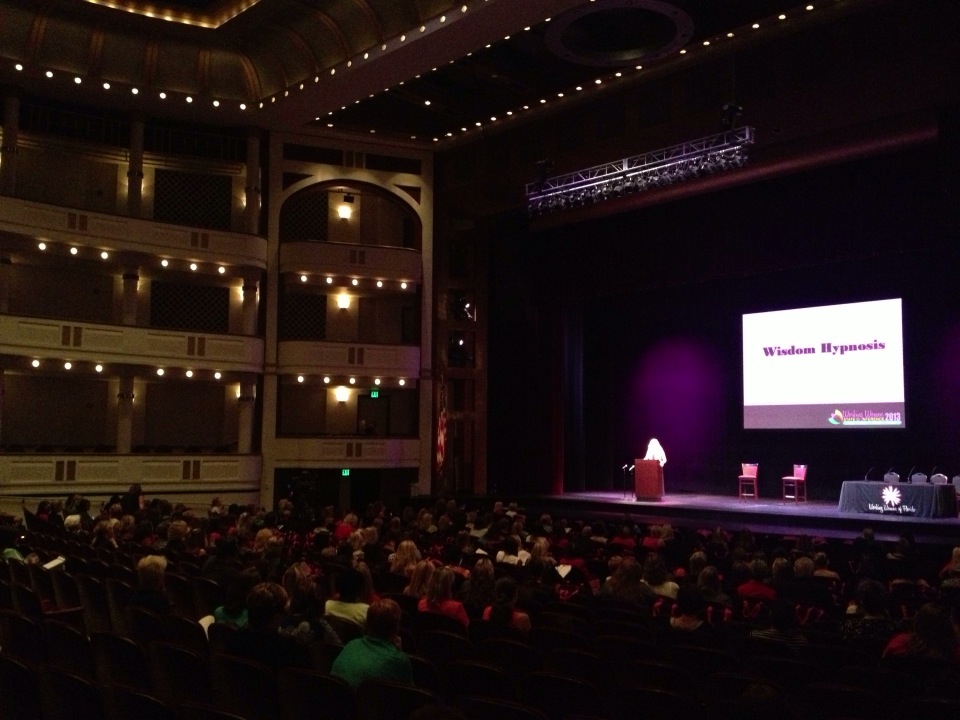
Audience watching speaker, Debbie Lane of Wisdom Hypnosis on stage in theater.

I recently had the honor of speaking at the Working Women of Florida conference held at the Mahaffey Theater. Standing on stage before more than 400 women and discussing overcoming fear was both humbling and inspiring. The conference was held in St. Petersburg, Florida, serving women from across Pinellas County, Clearwater, Palm Harbor, Dunedin, and Tampa Bay.

The energy, encouragement, and connection shared during those two days reminded me why helping people move beyond fear is work I deeply love.

During the presentation, I introduced what I call The 5 A’s of Overcoming Fear — simple but powerful principles that help transform fear into forward movement.


The 5 A’s of Overcoming Fear

1. Acknowledge

The first step in overcoming fear is acknowledgment.

Ask yourself:
What does this fear truly represent?

Often fear is symbolic rather than literal. For example, I once believed I had a fear of driving. In reality, the fear was connected to success and the life changes success might bring.

Once the true fear was acknowledged, moving forward became possible.


2. Awfulize

This may sound unusual, but intentionally imagining the worst-case scenario can reduce fear’s power.

When you “awfulize” a situation, you often discover:

  • The outcome is not as catastrophic as imagined, or

  • You already possess the skills needed to cope.

Fear loses intensity when examined realistically.


3. Appreciate

Fear once served a purpose.

At some point, it protected you, comforted you, or helped you survive a difficult situation. Appreciating its past role allows you to release it without judgment.

Just as childhood habits eventually fall away, outdated fears and limiting beliefs can be outgrown.


4. Ask (Afform)

The questions we ask ourselves shape our emotional experience.

Instead of asking:
“What if this goes wrong?”

Try asking:
“What if this goes right?”

This approach aligns with the concept of Afformations, developed by Noah St. John, which focuses on empowering questions that guide the mind toward solutions and possibility.


5. Act

True overcoming of fear happens through action.

Understanding is important — but experience creates transformation.

Deciding you are no longer afraid of elevators is one thing. Riding in one is the victory.

Take small steps. Find supportive people. Celebrate progress.

Action turns insight into confidence.


Creating a Life Beyond Fear

Overcoming fear is not about eliminating fear completely. Instead, it is about learning to move forward even when fear appears.

Today is a perfect day to begin creating the life you desire — one step, one choice, and one courageous action at a time.

I would love to hear your stories of courage and growth. Please share your successes in the comments so others may be inspired as well.

Child kneeling in prayer with gratitude

What qualities would you like to be remembered for? When you think about your personal legacy, consider the impact you hope to leave behind.

Loving. Friendly. Creative. Steadfast. Warm-hearted. Reliable. Humorous.

What is it for you?

Your legacy is not created at the end of life — it is shaped daily through the way you live, think, and treat others. The qualities you practice today quietly become the lessons future generations learn from you.

So begin now.

Practice the Qualities You Want to Leave Behind

Monitor your thoughts and treat yourself with compassion. The relationship you have with yourself becomes the model for how you relate to the world.

Take time each day to feel gratitude for life’s simple pleasures — morning light, shared laughter, a peaceful moment of breathing. Research from the Greater Good Science Center at UC Berkeley shows that practicing gratitude improves emotional well-being, resilience, and overall life satisfaction.

Breathe deeply.
Just two minutes of focused breathing each day teaches your nervous system how to return to calm and clarity.

Move your body daily. Exercise strengthens not only your muscles but also your emotional resilience and mental well-being.

Protect your rest. Turn off the television, silence the endless scrolling, and allow your mind the quiet it needs to restore itself.

Eat mindfully. Notice the flavors, textures, and aromas of your food. Nourishment is both physical and emotional.

Release clutter — in your home and in your mind. Clutter occupies space in your environment and in your thoughts.

Let go of guilt. Guilt often lives in the past and rarely helps us grow. Choose learning instead of self-punishment.

Find reasons to smile and laugh. Joy is contagious and leaves a lasting imprint on those around you.

Follow your spiritual path, whatever form that takes for you. Meaning gives direction to a life well lived.

Your Legacy Begins Today

You can evolve into the person you aspire to be.

What you practice becomes what others witness.
What others witness becomes what they remember.

So ask yourself:

What will your legacy be?


Seal for Sheila Granger, Virtual Gastric Band Certified Practitioner.

Recently I have had the good fortune of being introduced to an incredible author. Fawn Germer is a Pulitzer-nominated author of two best selling books, “Hard Won Wisdom” and “Mustang Sallies”. Fawn has been recommended by Oprah Winfrey, so how much more can I say? When I obtained my copy of her latest book, “The New Woman Rules” (More than 50 trailblazers share their wisdom) I could not wait to sit down and read it. It has been more like devour it!

This book is the personal stories of extraordinary businesswomen who have more than succeeded, they are at the very top! These women vary in background and education, but they are all leaders. In reading their stories, they seem like my friends, sisters and colleagues. So, what makes them so different? Why did they get to the top when so many don’t? Fawn carefully explains the lessons they share from don’t hesitate to raise your hand to ask others for help.

I think what struck me the most however, was the amazing ability that each of these women had to rely on their inner wisdom. They explored their inspirations and allowed whatever was meant to be, be. I am not saying they ran wildly into the night spending foolishly at the expense of the company they worked for. It is just that they also did not over analyze their instincts. Not every experiment was a success, either.

Cathy Green, the COO of Food Lion tells of an experiment to expand a store she was managing early in her career. She was successful in increasing sales and needed more space for product. So, she decided to add a tent outside. The town council required a $15,000 sidewalk installed for this tent, she had the expense of Muzak, lights and shelving. When it was finished, she says it was debatable if they even made $100 from it. Here is her take on it,”Someone looking in might say it was a failure. But it gave me broad learning about working with town politics, driving business and bringing a vision to life. You learn from everything. Failure is not an option.”

Over and over I read those sentiments in the book. Each of these women had the vision to see what lessons they learned and keep on going. Many of them made lateral moves along the way, some even stepped down in order to step up later. These women were able to “re-frame” the events in their lives in a way that benefited them, their co-workers and their companies.

Fawn sums the lessons up so well in her conclusion. To quote her, “Be your true self. You are your greatest asset, so work it.” Later she states,”See yourself as belonging at the top, and you will belong at the top.” In other words, release fear and visualize the life you desire now!

Thank you Fawn for writing this incredible book!