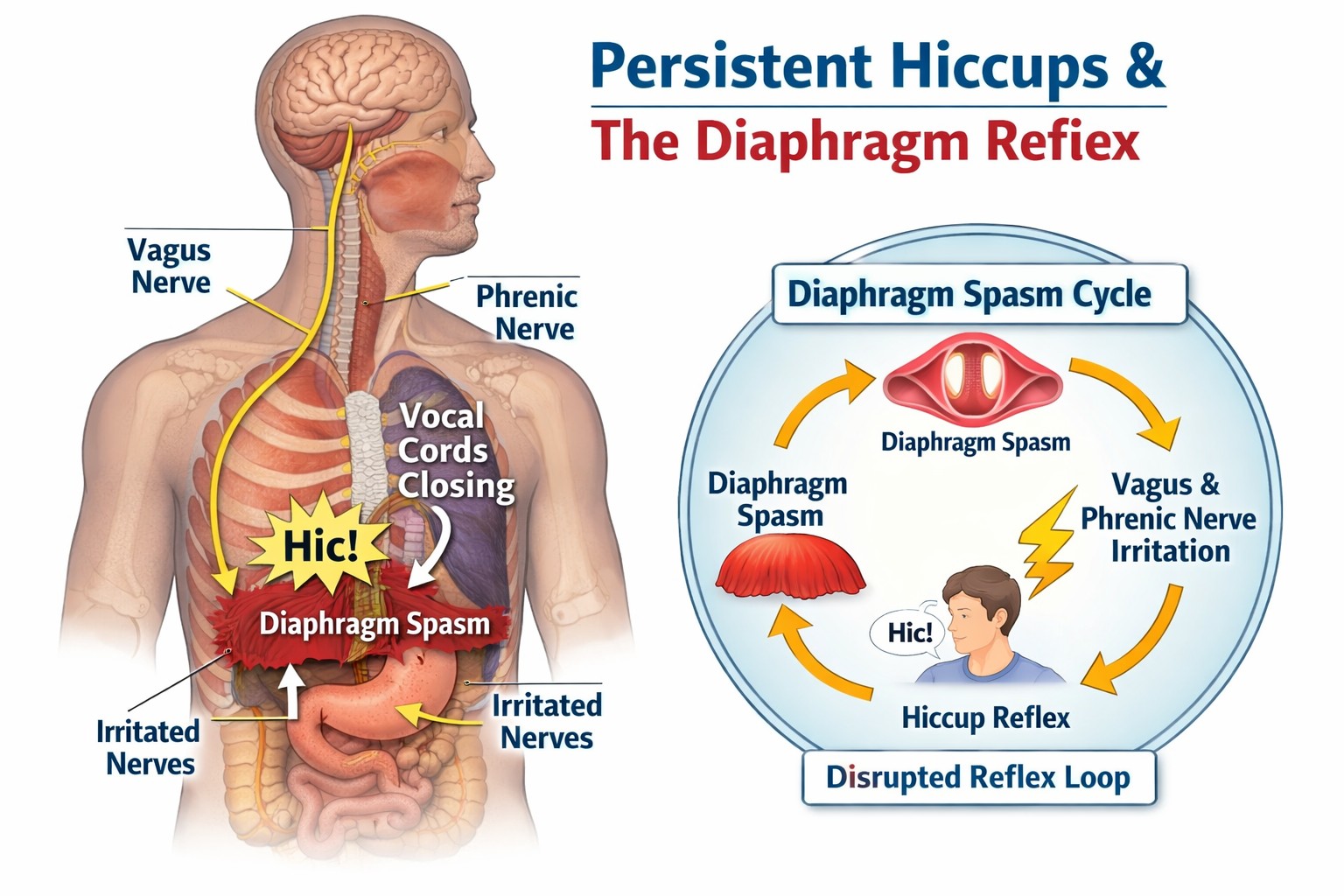
Most people think of hiccups as a minor annoyance that disappears after a few minutes.
But what happens when they don’t?
Persistent hiccups can interfere with eating, sleeping, speaking, socializing, and quality of life. Many people spend months—or even years—searching for answers. While medical conditions should always be investigated first, many people begin to notice something else:
The more they worry about the hiccups, the worse the entire experience becomes.
Can stress actually cause persistent hiccups?
The answer is more complicated than a simple yes or no.
Persistent Hiccups Always Deserve Medical Evaluation
Before considering hypnosis or any stress-management approach, persistent hiccups lasting more than 48 hours should always be evaluated by a physician. The Mayo Clinic explains when hiccups may be a sign of an underlying medical condition and when it’s important to seek medical care.
Hiccups lasting more than 48 hours can sometimes be associated with medical conditions involving the digestive system, nervous system, medications, or other underlying illnesses. Your doctor may recommend testing to rule out these causes.
Hypnosis is not a replacement for appropriate medical care.
Instead, it may become one part of a comprehensive approach after serious medical causes have been investigated.
The Stress-Hiccup Cycle
Even when a medical condition starts the hiccups, many people describe developing a second problem.
Many people find themselves under increasing stress as they begin anticipating the next hiccup
They become embarrassed eating in public.
They fear long car rides, church services, meetings, restaurants, or bedtime because they don’t know when another episode will begin.
Over time, the body begins living in a constant state of anticipation.
That anticipation itself can increase muscle tension, breathing changes, and nervous system activation.
Instead of thinking only about hiccups, the brain begins watching for hiccups.
Can Stress Make Hiccups Worse?
Many physicians recognize that stress can influence numerous physical symptoms, including muscle tension, gastrointestinal function, breathing patterns, and reflexes.
While stress is not necessarily the original cause of persistent hiccups, it can become part of the cycle that keeps the experience distressing.
People often tell me things like:
- “I’m afraid to eat.”
- “I’m waiting for the next one.”
- “I can’t stop thinking about them.”
- “The hiccups have taken over my life.”
At that point, we’re no longer talking only about the diaphragm.
We’re talking about the entire mind-body response.
Why Do Hiccups Sometimes Disappear…Then Return?
One of the most confusing experiences for people with persistent hiccups is that symptoms sometimes improve unexpectedly.
A person may wake up without hiccups after weeks or months of struggling.
They may enjoy an entire day feeling almost normal.
Then the hiccups return.
That can be emotionally devastating.
Fluctuations like this are one reason persistent hiccups deserve careful medical evaluation. Symptoms can naturally vary over time, and improvement doesn’t necessarily mean the underlying cause has completely resolved.
It also reminds us that the nervous system is dynamic rather than fixed.
How Hypnosis May Help
Hypnosis doesn’t “fight” the hiccups.
Instead, many clients use hypnosis to help calm the nervous system and interrupt patterns of fear, anticipation, and tension that have developed around the condition.
Sessions may focus on:
- reducing anticipatory stress
- improving relaxation
- changing conditioned responses
- improving sleep
- restoring confidence around eating and social situations
- reinforcing the body’s natural ability to settle into healthier patterns
Every client is different.
Sometimes hypnosis becomes an important part of recovery.
Sometimes it simply helps people cope better while continuing medical treatment.
Either outcome can improve quality of life.
What I’ve Observed in Practice
During more than two decades as a clinical hypnotherapist, I’ve worked with people whose hiccups appeared during periods of significant stress, as well as others whose hiccups clearly had complex medical histories.
One gentleman, a combat veteran, experienced periods where he awoke completely free of hiccups after months of struggling. Those symptom-free mornings gave him hope, even though the hiccups later returned.
Rather than focusing only on the return of symptoms, we spent time reinforcing what his body had already demonstrated—that it was capable of experiencing periods without hiccups. Along with physician-directed medical care, we worked on reducing fear, practicing relaxation exercises, using guided audio sessions, and shifting attention toward moments of relief instead of constantly anticipating the next episode.
Every case is unique, and no responsible practitioner can promise results. But experiences like these continue to remind me that persistent hiccups involve more than a simple physical reflex. They affect confidence, emotions, relationships, sleep, and daily life.
Frequently Asked Questions
Can stress cause hiccups?
Stress can influence breathing, muscle tension, and nervous system activity. In some people it may contribute to hiccups or make existing hiccups feel worse. Persistent hiccups should always be medically evaluated first.
Can hypnosis cure persistent hiccups?
No ethical hypnotherapist can promise a cure. Hypnosis may help reduce stress, interrupt conditioned responses, and improve coping for some individuals as part of a broader treatment plan.
How many hypnosis sessions does it take?
Every person is different. Some people notice changes quickly, while others benefit from several sessions combined with home practice and medical care.
Do I have to believe in hypnosis?
No. You don’t have to “believe” in hypnosis any more than you have to believe in relaxation. The important ingredients are willingness to participate and the ability to follow simple instructions.
You’re More Than Your Hiccups
Persistent hiccups can feel isolating.
Many people tell me that friends and family don’t understand how exhausting they become after weeks or months.
If you’ve already been medically evaluated and you’re looking for additional ways to reduce stress, improve relaxation, and break the cycle of anticipation, hypnosis may be worth exploring.
You don’t have to fight your body.
Sometimes the first step is helping your body remember what calm feels like.
Looking for Additional Support?
If you’ve already been medically evaluated for persistent hiccups and are interested in learning how hypnosis may complement your care, you can learn more here:
➡️ Hypnosis for Persistent Hiccups
Estimated reading time: 5 minutes