self-talk

Close-up of a pink gerbera daisy.


I have written about self-talk before. It is such a part of how we see ourselves. Yesterday it dawned on me that it was time for me to take inventory of the things I have been saying. I woke up anxious for no apparent reason and when I checked in with my “gut” there was still no reason to feel that way other than the fiction in my head. Therefore I reached out to a hypnosis friend of mine and she assisted me in making a change from stinking thinking to nurturing thoughts. It is time for me to practice mindfulness in my thoughts.

I realized that as I awoke, my thoughts were busy trying to get work accomplished and I hadn’t even lifted my head off of the pillow. My husband awoke with loving thoughts. Even the puppies woke up looking for belly rubs. Next, looking in the mirror I was far too quick to look at my bedhead instead of my smile. I realized that I have been critical of myself if I don’t get done quickly enough. I am not living in a pressure cooker, other than the one I had created for myself.

Becoming aware of self-talk

Now I stop and notice what my thoughts are. If the things I am thinking are not kind or add value to my day, I will change (even challenge) them. If I notice my bedhead first, I will laugh and think, looks like you had a great night’s sleep! If I make a mistake, I think how can I learn from this experience and stop berating myself.

Take a moment and ask yourself throughout the day, what are the things you say to yourself? During those quiet times, maybe when driving or waiting for someone and you have that chatter in your head. It’s your inner voice speaking to you. What is that voice saying to you? When you forget something, what do you say to yourself? When you realize you have made a mistake, what do you say to yourself? Are you kind, funny or compassionate? Are you encouraging, uplifting?

If you are critical, negative or hard on yourself, ask yourself why. If you wouldn’t speak to a friend or loved one in the same tone, then it is time to change that tone. Would you allow a stranger to speak to you that way? If not, then it is time for change. We teach others how to treat us. If we are busy being nasty to ourselves, how can we expect any different from others?

How we speak to ourselves is reflective in our posture, facial expressions and even our tone of voice. Our mood sours when we are nasty to ourselves. No one wants to be around a sour puss. Furthermore, it is natural for us to want to be right. So if our self-talk is negative, we create a self-fulfilling prophesy. Remember that all powerful subconscious mind. It hears and obeys.

Thought: I am so forgetful!

Response: Subconscious mind blocks a memory.

Thought: I am so fat

Response: Subconscious mind goads us into emotional eating or skipping exercise.

Begin to notice your thoughts. Notice the negative ones and think in terms of a healthier thought. Write down the new thought on an index card you can keep handy. Next time you find yourself going in the direction of negative, pull out the card and read aloud the new healthy thought. Read it aloud three times to really plant that new concept in your mind. In sessions I will often compare the subconscious mind to fertile ground. Whatever we plant, will grow. If we plant flower seeds, we get flowers. If we plant poison ivy seeds, we get poison ivy. Whichever seeds we nurture will flourish. It is time to put that negative self-talk in the trash bin and take the positive encouraging self-talk and place it where it will get lots of attention and grow.
A modern living room with a white sectional sofa and large windows.

Take a moment now to think how you want to live. How do you want others to speak to you? What do you want to feel about yourself? Now imagine that those words are petals of a beautiful flower that you are growing. Look over in your mind’s eye those petals, see those thoughts flourish and breathe in the fragrance of beauty. You could put a picture of your favorite flower on the index card where you have written the new thoughts. That way every time you reread the positive thoughts you also see the flower. Soon, all you will want to do is stop, take a deep breath in as if you were breathing in the scent of that flower and the good thoughts will start to roll!

Red spiky flowers with green leaves.
“My life has been filled with terrible misfortunes, most of which have never happened.” ~Mark Twain
This quote is a perfect illustration of why cognitive reframing for stress can be so powerful.
 

Have you ever noticed how a single shift in perspective can suddenly make life feel easier? Cognitive reframing for stress is the process of changing how we interpret situations so our nervous system responds differently. A simple change in thought can reduce anxiety, restore clarity, and completely alter how a day unfolds — as I was reminded recently by an unexpected fall.

Suddenly, your perspective changes.
Your mood lifts.
Things feel… easier.

That shift is called cognitive reframing.

How Thoughts Shape Stress and Clarity

Stress can increase or decrease based largely on our thoughts. Anxiety, stress, and irrational thinking shape how we experience daily life and how we respond to situations.

The body’s stress response isn’t triggered by events themselves — it’s triggered by perceived stress. Reframing thoughts can literally change physical stress reactions, helping restore emotional balance and mental clarity.

This kind of reframing happens often in my office. I teach it, talk about it, and encourage it regularly. One might assume that means I live in a perpetual state of positive thinking.

I wish.

Sharing this story feels vulnerable, but it matters. Because we’re all human — and we’re all in this together.

The Bike Ride and the Fall

This past Saturday, my husband Greg and I went for a bike ride. Cycling has always been a source of exercise and mood enhancement for both of us. We’ve logged many miles over the years.

I had recently been ill and wasn’t fully back to my normal strength, but I was determined to push through.

At one point, Greg noticed beautiful flowers tucked into a clump of trees and asked me to turn around so we could look more closely. Normally, this would have been easy.

Instead, my balance failed me — and I fell.

I lay on the ground with tears in my eyes, more from humiliation than pain.

When Thoughts Spiral

Once I got up, I truly enjoyed the flowers and even took several photos. In that moment, everything felt fine.

But as we got back on our bikes, my thoughts took over.

I felt old.
Clumsy.
Stupid.

At our next stop, I began lamenting my condition to Greg.

Thankfully, Greg would have none of it.

A Reframe That Changed Everything

He reminded me of a recent conversation with his clients — people who had suffered from the same virus I had. Many were younger, stronger, more balanced — and many struggled longer than I did.

The fact that I was out riding at all was a testament to my immune system and determination.

That simple reframe changed everything.

Suddenly, it was as if the sun rose — though it had been shining all along.

Clarity Returns

We were riding along a beach causeway. I noticed families playing, children laughing, brilliant colors, a warm breeze, the sound of water — and yes, a dolphin swimming nearby.

My thoughts shifted to confident, grateful ones.

I felt strong again.
Present.
Clear.

I was simply happy to be there.

One Thought Can Change a Day

Nothing about my physical situation changed — except my thoughts.

A single cognitive reframe turned frustration into appreciation and restored clarity and peace.

Can you think of ways your thoughts might help improve your day?


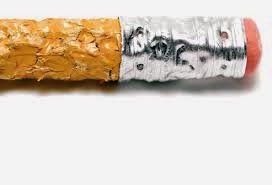
Chewed pencil end with eraser and ferrule.
April 16 (the day after Tax Day, April 15) has become a special day to set aside for Americans to become aware of just how stressed they may have become! Everyone feels stressed from time to time and if left unchecked, it tends to be a real happiness killer as well as a threat to your health. This makes it harder for us to live joy-filled lives. Stress has also been reported to lead to a number of major health problems, ranging anywhere from anxiety or severe depression to physical symptoms such as a mild case of acne to life-threatening heart attacks. It is easy to see why it is so vitally important to keep life’s major stressors in check.
Scientists report that psychological stress may exact its toll, at least in part, by affecting molecules believed to play a key role in cellular aging and possibly, disease development.  Anecdotal evidence and scientific evidence has have suggested that chronic stress can take years off your life. Stress can also have an indirect effect on the immune system as a person may use unhealthy behavioral coping strategies to reduce their stress, such as drinking and smoking. It is easy to see why it is so vitally important to keep life’s major stressors in check.
Enough of the dire news and warnings, I don’t need to stress you out more.
Instead, here are some quick tips for changing into a stress free zone for the day and at the end a link  to 3 free audios I have available for you to reduce your stress!

1. Focus On The Now

So many people live their entire lives in yesterday or tomorrow. The truth is, however, that there is only the Now. Focusing on this moment, right now, provides a wonderful escape from the disappointment of what once was and the fear of what might be, leaving stress stuck in a time warp. (You do remember the Time Warp, right?)

2.   Give Yourself A Pep Talk
Sometimes a good talking to is all you need to keep stress at bay. Maybe it is about time you gave yourself a pep talk, reminding yourself what is right with your life instead of dwelling on what’s wrong. Ask yourself how you got so lucky to have a roof over your head, food on the table and the opportunity to experience so much each day.

3.     Get the Giggles
Laughter really is the best medicine. Watch a comedy, share a funny joke, or go to a card shop and read funny cards. I always told my sons to find a reason to smile and laugh as they walked out the door. Maybe you can do the same, then share whatever it is, give yourself time for laughter each and every day.

4.     Use Self-Hypnosis
A still mind is a stress-free mind, so take a deep breath, quiet your thoughts and let the stress melt away. Even ten minutes done daily for the next 30 days will do wonders for releasing stress in your life.

5.     Keep a Happiness Journal
Starting today, spend a few minutes reflecting on the day you just experienced and list five things about the day that delighted you. Review that list when tempted to return to the old stinking thinking track.

6.     Lend  A Helping Hand
Sometimes the best way to deal with stress is by providing relief to someone else. Placing your focus on others needs takes the focus off your own challenges. This will lead to less rumination and therefore less stress. So look around you, see who needs a hand up and offer yours.

7.     Listen To A Hypnosis Audio
I have three audios I have created that are free for you. Just stop by anytime to listen. Share them with your friends, let’s get this stress-less party started! Stress Free Audios

Woman applying hand sanitizer with a spray bottle.
 

Overcoming fear and anxiety is something many of us struggle with, often without realizing how much it quietly shapes our thoughts, decisions, and sense of inner peace.

St. Patrick’s Day is here and celebrations are in full swing — from turning rivers green (famously in Chicago and even locally the Hillsborough River) to parades and parties. According to tradition, St. Patrick drove the snakes out of Ireland. However, historians agree Ireland never had snakes. In biblical symbolism, snakes represented evil, and Pagans were often viewed the same by early Christians. The story is now widely understood as a metaphor — not for reptiles, but for beliefs, fears, and influences that were driven away or transformed.

I like to use this metaphor in a very different way.

I’m not in any rush to drive Pagans — or any other group of people — out of my life. But anything that stands in the way of inner peace? That can leave.

Fear as an Inner Snake

Ironically, I once had a horrid fear of snakes myself. Through self-hypnosis and gradual exposure, I was able to release that fear entirely. That experience taught me something important: fear is learned — and what is learned can be unlearned.

So what are the “snakes” that most of us are actually dealing with?

Fear tops the list.

Fear can rob us of inner peace almost instantly, the moment it becomes a thought. Anxiety, fear-based thinking, and avoidance often work together in subtle but powerful ways.


How Anxiety and Avoidance Work Together

We all have a continuous inner voice. When we are anxious or fearful, that voice can become loud, repetitive, and relentless. This self-talk directly affects our emotions and behaviors. When we start telling ourselves things that don’t line up with reality, anxiety grows.

Often, our first instinct when fear appears is avoidance. When danger is real, avoidance can be appropriate. But when fear is irrational, avoidance only strengthens anxiety.

Avoidance “works” in the short term — we feel immediate relief. Unfortunately, that relief trains the brain to believe avoidance is the solution. Over time, fear begins to control larger and larger portions of our lives. Avoidance never makes fear go away; it teaches fear where our boundaries are.

This is why overcoming fear and anxiety requires awareness, not escape.


Reframing Fear to Restore Inner Peace

Many people naturally focus on the negative side of any challenging situation. When we focus on what could go wrong, we resist taking action and become stuck. The more we focus on loss, the more anxiety we create.

A powerful way to begin reframing fear is to bring it into the open.

Start by writing down your fears. In each situation that leaves you hesitant or anxious, ask yourself:

  • What am I afraid will happen?

  • How likely is that outcome, really?

  • If I take this fear to its extreme, what are the actual odds?

Then, on a separate sheet of paper, list the benefits of moving forward. Be specific. Fear amplifies negatives and minimizes positives, so you may need to consciously emphasize what could go right.

When you compare these two lists, fear loses its grip — and balance returns.


A Real-Life Example of Overcoming Fear and Anxiety

Recently, I worked with a woman experiencing frequent anxiety attacks. The onset of her anxiety coincided with starting a job search. As we talked, her fears surfaced clearly.

When we explored those fears fully, she realized she was unlikely to end up homeless or alone on the streets of Tampa Bay — the scenario her anxiety had quietly been suggesting.

As we reframed the situation and explored what could go right, her anxiety began to dissipate. She chose to move forward with her job search instead of letting fear dictate her choices.

Her snakes were driven away.


Channeling Your Inner St. Patrick

Take a moment today to channel your inner St. Patrick. Ask yourself:

  • What fears have been lingering too long?

  • Where has avoidance quietly been making decisions for you?

  • What inner snakes are ready to leave?

Breathe in calm. Picture the rolling green hills of Ireland. Imagine fear loosening its grip as clarity returns. Then ask yourself what beauty might be waiting for you on the other side of courage.

Overcoming fear and anxiety isn’t about forcing positivity — it’s about seeing clearly.

And sometimes, that’s all it takes to restore inner peace.

overcoming fear