DebbieDona

Person writing on papers with a pen.

“It does not do to leave a live dragon out of your calculations, if you live near one.” – J.R.R. Tolkien

A modern living room with a white sectional sofa and large windows.

Many of my clients come to see me specifically to reduce their weight. On the surface, they already know what to do. Moreover, they are usually very aware of the habits and patterns that prevent them from achieving the healthy body they desire. However, despite this knowledge, they often struggle to find the motivation needed for consistent follow-through.

At this point, I remind them of something important. Simply by showing up in my office, they have already demonstrated a level of motivation — and therefore, we have something solid to build upon. From there, we can begin working together. In addition to mindset shifts, we explore practical and creative ideas through brainstorming that help support lifestyle changes. As a result, these changes feel easier to transition into and, just as importantly, easier to maintain long term.

“Our goals can only be reached through a vehicle of a plan,
in which we must fervently believe, and upon which we must vigorously act.
There is no other route to success.”
– Pablo Picasso

Although Pablo Picasso was a creative genius, he clearly understood that inspiration alone was not enough. Instead, he recognized that achieving what he desired required both a plan and decisive action. Likewise, the same principle applies to weight loss. Without a clear plan in place, it becomes far too easy to give in to temptation and old habits.

Build a Weight Management Business Plan

Any successful venture requires a plan that clearly describes its mission and outlines how success will be achieved. Without one, you may not know where you’re starting, where you’re going, or how you’ll get there. Therefore, it can be helpful to treat your weight-loss goal as a business objective. After all, if you were trying to accomplish something meaningful for a client, you wouldn’t begin without a strategy.

In the same way, it’s time to prioritize your health with the same seriousness. While exercising regularly and reducing calories are essential to losing weight, your mental outlook can ultimately determine whether you succeed or give up. Consequently, mindset becomes the foundation for lasting change.

Begin by creating a personal mission statement. Ideally, it should be clear and concise so that you can repeat it often. Next, make a list of every reason you can think of for wanting to lose weight. As you do this, define your motivation clearly and note any reasons that involve other people.

Then, rewrite the list — this time omitting those highlighted items. Afterward, carefully inspect each remaining reason. Look for phrases such as “have to,” “need to,” or “must.” These words signal obligation rather than desire. Over time, obligation tends to invite resistance and rebellion. Instead, translate each “have to” into a “want to.” If certain reasons lose meaning when reframed, eliminate them and refine the list again.

Once you have clarity around what you truly want to achieve — along with a realistic deadline — begin working backward. First, create a monthly plan of action. Then, break that down into weekly and daily changes. Importantly, make these changes progressive rather than attempting everything at once. Gradual change is far more sustainable.

Additionally, consider how much time you are willing to dedicate to research, meal planning, meditation, and exercise. If you already have a packed schedule, ask yourself what you are willing to release in order to make room. Remember, where you place your time and attention consistently reflects your true priorities.

Finally, putting this plan in writing gives you a powerful tool. On difficult days, it becomes a reminder of why you started. On better days, it becomes proof that you are far more on track than you may have realized.

Hands holding various fresh berries outdoors.
A modern living room with a white sectional sofa and large windows.

During a session to stop smoking, I review practical tips and ideas to assist my clients in the process. This includes foods to help stop smoking. The research on foods to help stop smoking may be limited, but smokers widely report that some foods and drinks can help you. Duke University researchers became interested in claims from smokers that certain foods and drinks made cigarettes taste better. They decided to investigate it by surveying over 200 smokers about foods and drinks which make cigarettes either taste better or worse.

Here is a sampling of what they found:

  1. Milk and Dairy

Dairy products were identified as one of the types of food and drink that made cigarettes taste worse. Most smokers said that it gave their cigarettes a bitter aftertaste.

  • Vegetables and Fruits

It is reported that these foods to help stop smoking, make cigarettes taste less desirable. Furthermore, cigarettes block the absorption of important nutrients, such as calcium and vitamins C and D. (For example, smoking just one cigarette drains the body of 25 mg of vitamin C.) Not only will the former smoker now benefit from those nutrients, any possible cravings are diminished by eating these foods.

  • Ginseng
    Tea

There is research that suggests ginseng could be therapeutic. It may weaken the effect of dopamine, a neurotransmitter in the brain that is associated with pleasure. Dopamine is released when smoking tobacco. Studies suggest that ginseng could genuinely reduce the effects of nicotine. For those looking for foods to help stop smoking, incorporating ginseng could be beneficial.

  • Popcorn

Enjoy popcorn, just leave off the extra butter. Popcorn is high in fiber and low in calories. Plus, it keeps your hands busy. If the popcorn seems bland, try spraying it with a butter-flavored or olive-oil spray. You can add a blend of herbal seasoning, garlic, and onion powder, or a little red pepper powder.

  • Hummus

Hummus is rich in protein, fiber, and vitamins and pairs well with many raw veggies. Our body is ready to absorb the nutrients this snack provides now that the smoke has cleared. Including hummus in your diet can be part of a plan with foods to help stop smoking.

Statue of a seated figure draped in classical robes on a stone pedestal.

Smoking releases 7,000 thousand chemicals into your body. The result isn’t only damage to your lungs, but also your heart, organs and many other body structures. The good news is even if you’ve smoked for many years, you can reverse these effects and experience health benefits from the first hours you stop smoking to the decades after you quit.

For my clients who have stopped smoking, this is what you have to look forward to. If you are considering stopping smoking, this should help you decide.

Stopping smoking recovery timeline

20 minutes after your last cigarette

The positive health effects of quitting smoking begin 20 minutes after your last cigarette. Your blood pressure, pulse rate and the temperature of your hands and feet have returned to normal. Also, fibers in the bronchial tubes that previously didn’t move well due to constant exposure to smoke will start to move again. This is beneficial for the lungs: These fibers help move irritants and bacteria out of the lungs, helping reduce the risk for infection.

8 hours after your last cigarette

Remaining nicotine in your bloodstream has fallen to 6.25% of normal peak daily levels, a 93.75% reduction.

12 hours after your last cigarette

Your blood oxygen level has increased to normal and carbon monoxide levels have dropped to normal. When carbon monoxide goes away, your oxygen levels start to increase to more normal levels. This increased oxygen helps nourish tissues and blood vessels that were getting less oxygen while you were smoking.

24 hours after your last cigarette

By the one-day mark, you’ve already decreased your risk of heart attack. This is because of reduced constriction of veins and arteries as well as increased oxygen levels that go to the heart to boost its functioning.

Nicotine levels in your bloodstream have also decreased to negligible amounts at this time.

48 hours after your last cigarette

At 48 hours, previously damaged nerve endings start to regrow. You may realize you’re smelling and tasting things better than you were before.

72 hours after your last cigarette

Your entire body will test 100% nicotine-free. Over 90% of all nicotine metabolites (the chemicals nicotine breaks down into) have passed from your body via your urine.  You’ll often find yourself breathing more easily because the bronchial tubes inside the lungs have started to relax and open up more. This makes air exchange between carbon dioxide and oxygen easier. In addition, your lung capacity, or ability of the lungs to fill up with air increases.

2 weeks after your last cigarette

Within two weeks of quitting smoking, you may start to notice you’re breathing and walking easier. This is thanks to improved circulation and oxygenation. Blood circulation in your gums and teeth are now similar to that of a non-user.

21 days after your last cigarette.

The number of acetylcholine receptors, which were up-regulated in response to nicotine’s presence in the frontal, parietal, temporal, occipital, basal ganglia, thalamus, brain stem and cerebellum regions of your brain have now substantially down-regulated. Receptor binding has returned to levels seen in the brains of non-smokers (2007 study).

1 month after your last cigarette

In just one short month, you can experience many health changes related to stopping smoking. You may be feeling a sense of heightened overall energy. You may also notice that many smoking-related symptoms have decreased, such as sinus congestion and shortness of breath with movement. In addition to these benefits, fibers in the lungs that help keep the lungs healthy are growing back. These fibers can help reduce excess mucus buildup and protect against bacterial infections.

For The Science Geek (After 1 month)

(For the science geek) Plasma suPAR is a stable inflammatory biomarker that helps predict development of diseases ranging from diabetes to cancer in smokers. A 2016 study found that within 4 weeks of quitting smoking that suPAR levels in 48 former smokers had fallen from a baseline smoking median of 3.2 ng/ml to levels “no longer significantly different from the never smokers’ values” (1.9 ng/ml)

3 months after your last cigarette

Within three months after quitting, a woman can improve her fertility as well as reduce the risk that her baby will be born prematurely.

11 months after your last cigarette

Smoking decreases the thickness of the brain’s outer layer, the cortex. Smoking induced cortical thinning is associated with poor decision making, risk taking, a lack of impluse control, early dementia, and nearly 14% of Alzheimer’s cases worldwide. According to a 2015 study, it takes 0.9 years (10.8 months) without smoking to recover from the cortical thinning effect of each pack-year of smoking. Congratulations, your cortex is growing thicker and the quality of your thoughts, decisions and actions has improved.

1 year after your last cigarette

After one year of quitting smoking, your lungs will have experienced dramatic health improvements in terms of capacity and functioning. You’ll notice how much easier you breathe when you’re exerting yourself and how much less coughing you have compared to when you smoked. Your excess risk of coronary heart disease, heart attack and stroke has dropped to less than half that of a smoker.

3 years after your last cigarette

In three years after quitting smoking, your risk of a heart attack has decreased to that of a nonsmoker.

5 years after your last cigarette

If a female ex-smoker, your risk of developing diabetes is now that of a non-smoker (2001 study).

Your risk of death from lung cancer has dropped by half compared to when you smoked, according to the University of North Carolina.

10 years after your last cigarette

Your risk of being diagnosed with lung cancer is between 30% to 50% of that for a continuing smoker (2005 study). Risk of death from lung cancer has declined by almost half if you were an average smoker (one pack per day).  Risk of cancer of the mouth, throat, esophagus and pancreas have declined. Risk of developing diabetes for both men and women is now similar to that of a never-smoker (2001 study).

15 years after your last cigarette

At the 15-year mark, your risk for heart attack and stroke has decreased to equal that of a person who’s never smoked before.

20 years after your last cigarette

If a female, your excess risk of death from all smoking related causes, including lung disease and cancer, has now reduced to that of a never-smoker (2008 study). Risk of pancreatic cancer has also declined to that of a never-smoker (2011 study).

letting go fist

Are You One of the New Year’s Resolution Failures?

At this point, life has usually settled back into its normal routine now that the holidays are over. Unfortunately, this often includes the return of old habits you had resolved to change.

After all the parties and celebrations, the traditional New Year’s resolution arrives with great hope. However, statistics tell a different story. In fact, only about eight percent of people who make a resolution will successfully keep it. As a result, when a resolution isn’t maintained, it often leads to feelings of disappointment or failure.

Quite honestly, I shudder to think that 92 percent of us may walk around feeling like failures. Moreover, that image brings to mind a kind of emotional “walking dead,” going through the motions while quietly carrying self-blame.

Real Client Stories: Why Resolutions Really Fail

I recently had a client tear up as she shared how she had repeatedly failed at her goal of weight loss. Over the years, she had managed to lower the number on the scale. However, each time, the weight returned — and often surpassed her previous high.

This year, she believed, was finally going to be her year. Unfortunately, when she “failed” again, the tears poured down her face. While in trance, however, she made a powerful discovery. She realized she was unconsciously sabotaging herself due to old, unresolved family issues.

From there, we shifted our focus. Instead of working on weight loss, we worked on forgiveness. In addition, we addressed the lessons hidden within those painful experiences. We also focused on rebuilding her self-esteem. Notably, what we did not work on was her weight.

And here’s the part you already expect. As a result of this inner work, her weight began to drop naturally. In other words, once she stopped stuffing emotions and protecting herself with extra layers, her body no longer needed to hold on.

When Quitting Smoking Isn’t About Nicotine

Similarly, another woman contacted me about her desire to quit smoking. In the past, she had made it as far as three months smoke-free. However, each time, she eventually picked up a cigarette again.

She told me, “I just can’t fail again. I need to quit.” Instead of immediately agreeing, I encouraged her to come in so we could determine whether she was truly ready. Using muscle testing, we confirmed that she genuinely wanted to stop. Therefore, the next step was to find the real key.

As we talked, she revealed something important. She had started smoking with her sister, sneaking cigarettes from their parents. Over time, smoking became a bonding ritual. Even years later, she continued smoking “in memory” of her sister.

Consequently, quitting felt like abandonment. Once we uncovered that belief, everything changed. Together, we found a new way to honor her sister — one that aligned with health and self-care. Most importantly, she realized her sister would want her to live fully and well. In that moment, she stopped smoking.

Children, Coping, and Unconscious Habits

In another case, a gentleman called to ask about his son’s nail biting. His son desperately wanted to stop and regularly made it a resolution. Still, he would find himself unconsciously chewing his nails once again.

Eventually, we traced the behavior back to its origin. The nail biting began during a particularly stressful period. At that time, his mother received a serious medical diagnosis, while his father lost his job due to downsizing. Naturally, the child felt his world turn upside down.

Therefore, our work focused on what he could and could not control. In addition, we strengthened the coping skills he already had and introduced a few new ones. Interestingly, we never directly addressed the nail biting. Nevertheless, once his nervous system felt safer, the behavior stopped on its own.

Why Hypnosis Works When Willpower Fails

Ultimately, there are as many resolutions as there are people making them. If you find a method that truly works for you, by all means, use it. However, if you continue to struggle despite sincere effort, it may be time to look deeper.

That is where hypnosis can help. Whether your goal is to build unshakable self-confidence, quit smoking, lose weight, or eliminate insomnia, change becomes possible when you work with the inner mind. After all, hypnosis is a powerful tool for creating lasting transformation.

Your mind is extraordinarily powerful. Therefore, when you learn how to harness it intentionally, you can use that power for your growth, healing, and long-term success.

Curious What Your Inner Mind Is Ready to Release?

Sometimes the hardest part of change isn’t effort — it’s knowing where to begin. Hypnosis helps uncover the root of habits that no longer serve you and gently guides your mind toward healthier, more supportive choices.

If something in this article resonated with you, that’s not an accident. It may be your inner mind signaling that it’s ready for something new.

Reach out to learn more about hypnosis sessions and how they can support the changes you’ve been trying to make: 727-215-0283

More about how hypnosis can help you: https://wisdomhypnosis.com/services/

Christmas tree with presents and stockings.
A modern living room with a white sectional sofa and large windows.

Decorations are appearing everywhere, Christmas Carols are playing and events are being added to our calendars. It is the holidays. A time to focus on family, friends and our Spiritual beliefs. So, why do I hear so many people saying how stressed they are? Maybe it is because our focus becomes perfectionism instead?

We create expectations of the perfect decorations, gifts, parties, outfits and they all take their toll on our psyche. At the same time,in many businesses the end of the year means reviews and inventories that increase our workload. Added to this is the financial strains many feel with all of the added expenses. So it seems like “the most wonderful time of the year” becomes “the most stressful time of the year”.

So, what can we do? There are many things we can do to reduce “holiday stress.” This involves making choices. The power of our choices is amazing, when we remember that it is the little things that often make the biggest difference, we understand how big choice is.

So here are some choices you can consider to reduce stress

  • Choose to be money smart. Don’t overspend.Create a reasonable budget and stick to it. Remember it’s not about the presents, it’s about the presence.
  • Choose to keep your expectations balanced. You won’t get everything you want and things will go wrong. Remember thateverything doesn’t have to be perfect and don’t worry about things that are out of your control.
  • Choose to watch your diet and remember to exercise. It’s normal to eat more during the holidays, that doesn’t mean you have to abandon all sensibilities. Be aware of how certain foods affect your mood. If you eat fats and sweets, you will have less energy, which can make you feel more stressed and run down. Therefore, it can be very helpful to take a walk before and/or after a big holiday meal.
  • Choose forgiveness and acceptance. If some of your relatives have always acted out or made you feel bad, chances are they won’t change. If you know what you’re getting into, it will be easier to not let them push your buttons.
  • Choose to limit your commitments to those that you will have the time to enjoy. Eliminate activities or events that cause you to feel rushed or pressured. Fatigue, over scheduling, and taking on too many tasks can dampen your spirits. Learn to say no!
  • Choose to take some time for self-care. Whether it is getting a massage or listening to a hypnosis audio for stress relief, make some “me” time a priority.
Woman smiling while adjusting a weight scale.

Imagine If Thanksgiving Helped Your Diet

What if starting a tradition of gratitude resulted in becoming thinner?
Well, it just might be possible.

According to Dr. Robert Emmons, professor of psychology at the University of California, Davis, and founder of a research lab that studies the effects of grateful living, a 2003 research study found that participants who took time weekly to reflect on things for which they were grateful reported fewer symptoms of physical illness and spent more time exercising.


Gratitude, Stress Reduction, and Weight Management

There are other weight management benefits to gratitude as well. A study published in the Journal of Consulting and Clinical Psychology in 2015 found that people who took part in a diary exercise twice a week—documenting people and things that helped them at work—significantly reduced their stress and depressive symptoms.

Stress creates cortisol, and we have all been told how cortisol contributes to weight gain.


What We Think About, We Become

It is often quoted that what we most think about is what we become. Our self-talk tends to be negative and critical, so guess what we become?

If you spend your day thinking about how fat you are, how much you hate yourself, and how deprived you feel by your current diet, you will amplify those miserable feelings. Complaining inevitably creates even more circumstances to despise.


How Negative Thinking Sabotages Self-Control

Furthermore, negative thinking reduces our ability to cope with everyday annoyances, creating a bad day. On a bad day, we often justify overeating by telling ourselves we have “earned” whatever fattening goodie we consume.

If instead you turn your thoughts toward gratitude, you gain fortitude. It becomes easier to pause before you bite. Feelings of serenity and quiet joy make it easier to brew a cup of tea rather than guzzle a high-calorie chocolate shake with a couple of cookies.


Gratitude Encourages Mindful Eating

When we are grateful for our food, we are more likely to take the time to savor it. Angry eating or conciliatory eating both tend to be fast eating, which means we consume far more food before the fullness signal kicks in—if we notice it at all.


Simple Ways to Practice Gratitude

Many people enjoy keeping a gratitude journal. The act of writing down a grateful thought is powerful, especially when you can reread it during “not so grateful” moments.

Saying Grace before eating is not only a meaningful spiritual practice—it also slows you down, encourages a deep breath, and allows you to appreciate the food, the person who provided it, and the abundance it represents.

Try this little exercise:

Close your eyes and take a cleansing breath. Imagine someone for whom you are grateful. Consider what they bring to your life. Now, imagine life without ever having known that person. Allow yourself to experience this fully. Take another deep breath and then add the person back into your life. Now notice how your thoughts change and your body relaxes.

Send all the good feelings and sensations to your right hand, hold on to them. Allow any feelings of loss you may still be experiencing from not knowing that individual to be held in your left hand and then feel your hand open and release them.

Take a deep breath and relax even further. Imagine a mist of color (a favorite color) entering the area you are in and allow yourself to breath the color in. That color now reminds you of the person you are appreciating and the gratitude you feel for them. Breathe in the good feelings, add the color and now add a favorite scent, perhaps the cologne they wear, maybe something special from childhood. Bask in the sensations, make them as real and as intense as you can. Then just relax.

Anytime you see the color from your mediation, stop to take a deep breath and recall the gratitude you feel for that person.

Adult woman gently placing a supportive hand on a grieving man’s shoulder, representing comfort and emotional support after loss in Palm Harbor.

On September 11, 2018, I awoke early with the plans to take my brother (Rafer) out to run errands. He had been in a car accident and his car was totaled, so he enlisted my help. There were many ways he had been getting help from me for quite a while. Allow me to give you a little back story.

Six months after mom was placed in the skilled nursing facility, my father ended up in the same facility. My world became crazy busy. It was up to me to see to their finances and health care. I began visits as close to seven days a week as I could. Rafer had lived with them and now as he was on Disability he would need section 8 housing. He was put on a two year wait list! Every morning I would awaken at 4:30 trying to resolve his housing issues. I made calls, visits to facilities, spoke with social workers and more. He lived in fear of becoming homeless.

Maintaining balance had to become a priority for me. I used every tool I could imagine and even took classes to learn more.

This past July, Rafer was hit by another driver and his car was totaled. It became my goal to help him find a replacement, yet he never seemed to buy. The burden of helping him run errands, visit with my parents and look at car lots was simply too much. By September, his problems (while real) could not become my problems. So, I set boundaries. Therefore, I told my brother he had to find something/anything, and our trips would be less frequent. Our next day to run errands and look at cars was set for 9/11/18.

As I mentioned previously, I woke early that morning. I picked up my tablet and began to look at my email. There was one from Rafer and it was marked urgent, so I opened it first. In the email he gave a detailed account of how to care for his dog and where to find the dog’s food, supplements and other dog supplies. He ended the note with the statement that “he made this decision and he wanted no memorial or funeral!”

I panicked, wanting to head immediately to the house, however, I called 911 and they told me to stay put until they contacted me. While it was a couple of hours before the sheriff was at my door, it seemed like hours. My brother had suicided. He used the same efficient method as Robin Williams, Kate Spade and Anthony Bourdain.

My husband drove me to the house to pick up the dog and his supplies. My younger brother who lives in Georgia was packing and on his way to us. He was a tremendous support to me in many ways. He was also able to be here for the next devastating hit. Two days after Rafer died, my father died of natural causes.

Initially I was numb, in shock.

I promised my husband that if I felt overwhelmed with the grief, I would seek help through Hospice counseling, the same way I encourage my clients. Meanwhile, the “take charge” part of me attended to all the details that follow a death. Being busy was necessary, also it was cathartic.

However, the image I had created in my mind of my brother wouldn’t go away. That is when I made the call to see a grief counselor. Those visits were priceless. The therapist reinforced that I wasn’t responsible for my brother’s decision. Something my husband and younger brother had said, but the counselor doesn’t love me, so it became a valid point of view and not just a need to protect me. He reminded me of tools I use with clients, such as letter writing, mindful walking and self-hypnosis.

For the image, he mentioned something that sparked a recall of a tool I use regularly with my clients. It involves specific eye movements combined with redirecting thoughts. After that session, when I got in my car, before I started it up I used that method briefly. The image was neutralized. When I got home, I repeated the process. The image stopped showing up for me.

Last weekend we were saying good bye to a friend who is moving out of state and my husband mentioned Rafer’s death and in the context it was given, that gruesome image began to creep back in. I immediately went to the bathroom and used the method. Image gone again. With regular self-hypnosis sessions I am really feeling the new normal without feeling so much pain.

I share this with you, not to solicit any sympathy from you.

To me it is important that people understand that suicide is not a reason for shame. It sucks, really sucks for the survivor, but it can’t be kept a deep dark secret. I urge people to seek help, get more tools to help the healing whether they are the person contemplating suicide or the survivor of a loved one’s suicide. Too often, suicide is something we feel shame about and so we keep it a secret. When we keep a secret, we empower shame.

According to a report written by Harvard Medical School, “After a homicide, survivors can direct their anger at the perpetrator. In a suicide, the victim is the perpetrator, so there is a bewildering clash of emotions. On one hand, a person who dies by suicide may appear to be a victim of mental illness or intolerable circumstances. On the other hand, the act may seem like an assault on or rejection of those left behind. So, the feelings of anger, rejection, and abandonment that occur after many deaths are especially intense and difficult to sort out after a suicide.”

After any death, there are the inevitable “what if” questions. However, after a suicide the questions often become more extreme and self-punishing — unrealistically condemning the survivor for failing to predict the death or to intervene effectively or on time. Experts tell us that in such circumstances, survivors tend to greatly overestimate their own contributing role — and their ability to affect the outcome.

Research suggests that suicide survivors find individual counseling and suicide support groups to be particularly helpful. There are many general grief support groups, but those focused on suicide appear to be much more valuable. I chose the route of individual counseling as I mentioned above and I am so very glad I did. It is truly my intention that anyone who is facing a challenge in mental wellness seek help. There is no shame in needing help, it is a crying shame to not get help.

Two articles that are helpful:

*Practical Information for Immediately After a Loss

*Support After Suicide

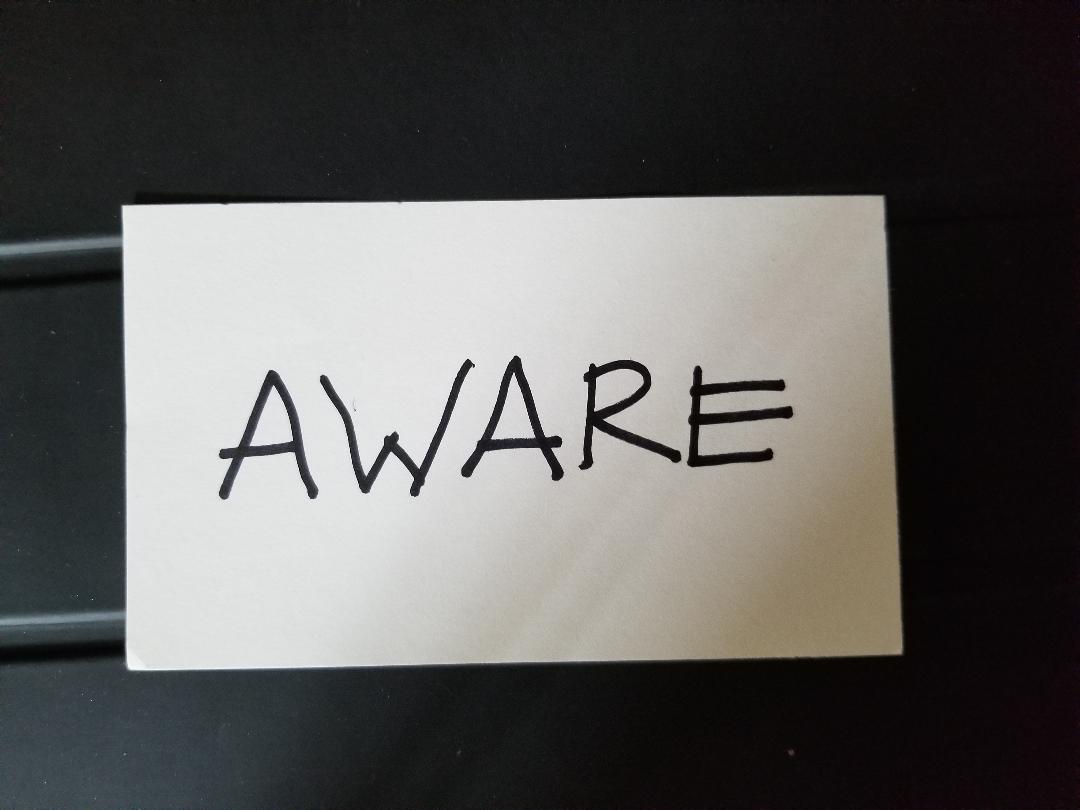
Card with the word "AWARE" written.


There are times that anyone may experience anxiety. Before making a life changing decision, taking an important test or upon hearing unexpected news. Usually, those feelings pass, they are temporary. However, for the person diagnosed with Anxiety Disorder it can build and continue until it interferes with daily activities.

A modern living room with a white sectional sofa and large windows.

WhileI don’t diagnose, I frequently get referrals from doctors who have patients with Anxiety Disorder that are looking for relief. Hypnosis has proven to be very effective in helping reduce the stress levels and help to reset thoughts. I often record the trance portion of our session to help my client reinforce the new feelings after we have met.

I am always looking for new tools to help in the diminishing of stress and anxiety. So, much to my delight a new tool found a way into my toolbox and I really want to share it. I asked a beautiful young friend of mine who deals with anxiety to give me 3 words for it. She instantly responded with suffocating, tense and nervous. What she didn’t know was, she was already using the first step of the new tool. She has used some of the other steps as well in the past. This is simply a lovely way to put them into a quick simple practice.

Right now, if you are suffering from anxiety, pull out an index card and write the word AWARE on it. Aware is an acronym for Accept, Watch, Act Normal, Repeat and Expect. Allow me to explain.

Accept: accept that you are feeling the anxiety and go a step further to name it. Yes, use as many creative words as you can to give it a name. According to a 2015 study1 putting feelings into words can reduce the physiological symptoms of anxiety.

Watch: watch the anxiety. Observe it as if it was something you could rate, give it a number on a scale of 1 – 10. Just by doing that you have removed some of the attachment you might have to the sensations. It is now a number instead of a state. Then take a few slow deep breathes and notice if the number changes. (Frequently it will go down a number or two.)

Act Normal: Take some slow deep breathes, making sure that the exhale is longer than the inhale. (i.e. in to the count of 4, hold to the count of 4 and release to the count of 8.) If you are speaking, calm your speech down as well. Keep your attention on the breathes or the moment you are speaking about. Think about your surroundings instead of your worries.

Repeat: Simply repeat the first 3 steps as needed.

Expect: Expect the best results as that is what you deserve!

By pulling out the card and reminding yourself to use those steps you can redirect your “awareness” from feeling uncomfortable to feeling peaceful. Ironically, the sensations we feel during anxiety are often the same sensations we feel when excited (think the night before your birthday or another big holiday as a kid) and when exercising. Heart pounding, gasping breathes, sweaty palms and shaking can all happen when you are excited or heavily exerting yourself, yet you don’t think of that as an attack. So maybe panic attacks are simply mislabeled physiological occurrences that we tie to negative thoughts.

Once the moment has passed, it is time to move on to keeping that old anxiety away. According to Dr. Daniel Amen, who has written several books on the brain2 daily elevated heart rate (such as walking briskly) improves the heart, the brain and your mood! Therefore, daily exercise such as a taking that brisk walk or dancing around your house will help keep those tigers away.

While fear and anxiety may have a rightful place on occasion, it does not have to control you. Use these tips along with a little hypnosis and take back your thoughts and your joy!


  1. https://www.sciencedirect.com/science/article/pii/S0005796715000431
  2. https://www.brainmdhealth.com/education/media/books?utm_campaign=BMD+-+Branded+-+Books&utm_source=AdWords&utm_medium=Paidsearch&utm_kmkw=daniel+amen+books&gclid=CjwKCAjw-8nbBRBnEiwAqWt1zULDpMWpZ6Fj1A9Wal9zmUiVOW-J7FTmkoz3Tl_u7F2aqpgxos0akBoCb8QQAvD_BwE


Glass ashtray with cigarette butts and ashes.


A modern living room with a white sectional sofa and large windows.You have made the decision to quit smoking and you have tried numerous times, still you smoke. Finally, as a last resort, you remember that your Great Aunt Janie quit for life after trying hypnosis and decide to investigate it. After a search online or asking friends, you decide to have an appointment with me. As you drive to see me, you smoke as many cigarettes as you can possibly squeeze in, even lighting one last one up before you come into my office. You are nervous and feeling maybe even a little silly.

As I review your paperwork, you squirm. Maybe even using the bathroom to throw some water on your face. What if this doesn’t work? Even more pressing, will you miss your old friend? You begin to fight tears just thinking about saying good bye.

Sound familiar? Sound possible? Well, I encounter this reaction with many of my soon to be nonsmokers. Nervous laughter, fighting tears or just babbling on without the seeming ability to stop talking. I get it, this is more than just quitting, this is a war on your senses!

From your first cigarette, the chemicals released into your body affect your brain and your body. The intake of nicotine increases the levels of dopamine and epinephrine in your brain. Dopamine plays a major role in reward and pleasure centers. This helps us identify rewards and take action that moves us towards those rewards. Thus we begin to relate cigarettes to reward. Next, there is a release of epinephrine or adrenaline, which increases cardiac output and raises glucose levels in the blood to prepare for a “fight or flight” response. This combination helps create the “nicotine buzz” you experienced with those first cigarettes.

This high causes lightheadedness, elevated mood and pleasure. Bam! This is what makes people want to keep smoking and become hooked. However, this high will not come again after the first couple of cigarettes because the nicotine raises the brain’s expectations of what pleasure should be. A person becomes reliant on cigarettes because their brain is chasing that feeling of pleasure that they once had. (Sound like the description of a gateway drug?)

Although many young people experiment with cigarettes, other factors influence whether someone will go on to become a regular smoker. Having friends (peer pressure) or relatives who smoke and parents’ attitude to smoking all influence the decision. As young people become adults, they are more likely to smoke if they misuse alcohol or drugs. Regardless of the expense another factor is living in poverty. Because poverty makes it more likely that someone will encounter stress. Most adults say that they smoke because of habit or routine and/or because it helps them relax and cope with stress.

Therefore, I ask many questions about your habit to understand your triggers and motivators. I observe your body language and watch facial expressions. All the while, I am working on helping you to understand how hypnosis works and helping you to lower those doubts and fears. I include stress reduction because as I stated earlier, smokers tend to light up when stressed.

The trance portion of the session is when the “magic” happens. While the conscious logical mind may doubt, argue, fear or whatever emotion comes up for you, the subconscious mind works to give you your wishes. If it is your wish to be smoke free, then smoke free you will be. This portion is recorded and given to you, for back up at a later date, should you want it. You leave the office smoke free because this time you really quit smoking! Here is the true story of one of my former smokers: One Clients Story


The best reward for me is the call 6 months, a year or more later, from the friends and family of the former smoker who want to know if I can help them quit smoking too. I dream of living in a smoke free world and each of you who quits, helps to bring me another person closer to seeing that dream become a reality.

Colorful balloons and confetti in sky.


While cleaning out closets and decluttering my home I came across a list I wrote over a decade ago of ways to celebrate. This made me smile and think about what changes I have made. Also, I thought about whether I celebrate enough. Do I do the things on this list enough? Do you? How do you celebrate?

(I must confess, I updated #21 as we now have a local float center.)A modern living room with a white sectional sofa and large windows.

  1. Chocolate
  2. Champagne
  3. Daydream
  4. Bubble bath
  5. Sex
  6. Naps
  7. Breakfast in bed
  8. Trashy novels
  9. Lingerie
  10. Hot fudge sundae
  11. Rose petals in bed
  12. Diamonds, gems, jewels
  13. Candle light
  14. Skipping work
  15. Dance
  16. Gamble
  17. “Make a wish”
  18. Watch Petticoat Junction reruns
  19. Facial
  20. Eat pizza
  21. Float in deprivation chamber
  22. Massage
  23. Wear a crazy hat
  24. Rollerblade
  25. Play “Light My Fire” on the piano
  26. Do the twist
  27. See a chick flick
  28. Eat buttered popcorn
  29. Take a limo to buy groceries
  30. Breathe deep
  31. Manicure
  32. Pedicure
  33. High tea
  34. Listen to a Beatles Album
  35. Sing a silly song
  36. Plant flowers
  37. Cheese cake
  38. Lose the phone for a day
  39. Wear a tiara
  40. Watch a sunset
  41. Read a poem
  42. Play a mindless computer game
  43. Call an old friend
  44. Color outside the lines
  45. Fly a kite
  46. Play Chinese jump rope
  47. Light a candle at St Michael’s
  48. Wear a costume
  49. Create a gourmet meal
  50. Practice self-hypnosis

1 2 3 4 5 43