gratitiude

Woman smiling while adjusting a weight scale.

Imagine If Thanksgiving Helped Your Diet

What if starting a tradition of gratitude resulted in becoming thinner?
Well, it just might be possible.

According to Dr. Robert Emmons, professor of psychology at the University of California, Davis, and founder of a research lab that studies the effects of grateful living, a 2003 research study found that participants who took time weekly to reflect on things for which they were grateful reported fewer symptoms of physical illness and spent more time exercising.


Gratitude, Stress Reduction, and Weight Management

There are other weight management benefits to gratitude as well. A study published in the Journal of Consulting and Clinical Psychology in 2015 found that people who took part in a diary exercise twice a week—documenting people and things that helped them at work—significantly reduced their stress and depressive symptoms.

Stress creates cortisol, and we have all been told how cortisol contributes to weight gain.


What We Think About, We Become

It is often quoted that what we most think about is what we become. Our self-talk tends to be negative and critical, so guess what we become?

If you spend your day thinking about how fat you are, how much you hate yourself, and how deprived you feel by your current diet, you will amplify those miserable feelings. Complaining inevitably creates even more circumstances to despise.


How Negative Thinking Sabotages Self-Control

Furthermore, negative thinking reduces our ability to cope with everyday annoyances, creating a bad day. On a bad day, we often justify overeating by telling ourselves we have “earned” whatever fattening goodie we consume.

If instead you turn your thoughts toward gratitude, you gain fortitude. It becomes easier to pause before you bite. Feelings of serenity and quiet joy make it easier to brew a cup of tea rather than guzzle a high-calorie chocolate shake with a couple of cookies.


Gratitude Encourages Mindful Eating

When we are grateful for our food, we are more likely to take the time to savor it. Angry eating or conciliatory eating both tend to be fast eating, which means we consume far more food before the fullness signal kicks in—if we notice it at all.


Simple Ways to Practice Gratitude

Many people enjoy keeping a gratitude journal. The act of writing down a grateful thought is powerful, especially when you can reread it during “not so grateful” moments.

Saying Grace before eating is not only a meaningful spiritual practice—it also slows you down, encourages a deep breath, and allows you to appreciate the food, the person who provided it, and the abundance it represents.

Try this little exercise:

Close your eyes and take a cleansing breath. Imagine someone for whom you are grateful. Consider what they bring to your life. Now, imagine life without ever having known that person. Allow yourself to experience this fully. Take another deep breath and then add the person back into your life. Now notice how your thoughts change and your body relaxes.

Send all the good feelings and sensations to your right hand, hold on to them. Allow any feelings of loss you may still be experiencing from not knowing that individual to be held in your left hand and then feel your hand open and release them.

Take a deep breath and relax even further. Imagine a mist of color (a favorite color) entering the area you are in and allow yourself to breath the color in. That color now reminds you of the person you are appreciating and the gratitude you feel for them. Breathe in the good feelings, add the color and now add a favorite scent, perhaps the cologne they wear, maybe something special from childhood. Bask in the sensations, make them as real and as intense as you can. Then just relax.

Anytime you see the color from your mediation, stop to take a deep breath and recall the gratitude you feel for that person.

Two cigarettes with a warning: Don't think about smoking.

More and more, I see the hashtag #FirstWorldProblems used as a humorous commentary on modern life. It’s often meant to remind us that those of us living in Western societies have it relatively easy.

Examples abound:

  • A possible infection, another root canal, and the removal of two wisdom teeth — shaping up to be a fabulous summer. #FirstWorldProblems

  • I received new honors from my college, so now all my printed resumes are useless. #FirstWorldProblems

Worrying about which job offer to take may seem trivial compared to someone wondering whether they will survive another week or feed their family. And yet, perspective alone doesn’t always relieve suffering.

Why Comparing Pain Doesn’t Help

When we face real hardship, we often wonder how we ever got so worked up about what once felt like major problems. In hindsight, it can seem like wasted worry — time that could have been spent enjoying life.

However, when someone responds to our distress with “there are people who have it much worse than you,” it often feels dismissive rather than comforting. Many of us remember being told as children to be grateful for food we disliked because children elsewhere were starving. That didn’t inspire gratitude — it inspired guilt.

I once heard a therapist tell a client that because people in war-torn countries have “real problems,” she should be grateful that her husband leaving her with small children was all she had to face. Rather than comfort, that likely left the client feeling guilty, terrified, hurt, and unseen.

Awareness of global suffering doesn’t invalidate personal pain — because we live our lives where we are.

Fear Is Fear — Regardless of Circumstances

Fear, anxiety, and hopelessness do correlate with life circumstances — but only up to a point. Living in a safe environment increases feelings of security, but the relationship isn’t exact.

Fear is fear.

Whether someone is afraid of starvation or afraid of riding an elevator to work, the nervous system reacts the same way. A person living in an outwardly secure environment can still feel deeply unsafe inside.

Research supports this. Studies show that only about 10% of our happiness comes from external circumstances. The remaining 90% is shaped by our inner environment — our thoughts, interpretations, habits, and emotional patterns.

The Case for Practicing Gratitude

This is where practicing gratitude for happiness becomes meaningful — not as a way to dismiss pain, but as a way to shift inner awareness.

Across history, philosophers, spiritual teachers, and religious traditions have emphasized gratitude. Research now confirms what they intuited:

People who practice gratitude regularly experience:

  • Increased optimism, enthusiasm, and energy

  • Lower levels of depression

  • Improved immune function

  • Better sleep and more exercise

  • Greater progress toward personal goals

  • Stronger feelings of being loved and respected

Gratitude isn’t denial — it’s attention training.

Gratitude Without Comparison

Rather than focusing on how others have it worse, it’s more effective to consciously notice what you have.

Gratitude works best when it is non-comparative. Comparing yourself upward (she got the promotion and I didn’t) breeds resentment. Comparing yourself downward (others have it worse) breeds guilt.

Instead, focus on your own blessings.

A Simple Gratitude Practice That Actually Helps

The next time you feel worried or discouraged, try this:

  1. Think of three ways your situation could be worse for you — but isn’t.

    • This hurts, but I do have other friends.

    • This is stressful, but my kids are safe.

    • This didn’t work out, but I still have meaningful work.

  2. Then, briefly imagine your life without those blessings.
    Picture what it might feel like if they were gone — just long enough to feel the contrast.

  3. Important:

    • Choose blessings you genuinely appreciate

    • Do not focus on fears that are currently active or likely

    • Avoid scenarios that could intensify anxiety

  4. Return your focus to gratitude.
    Let yourself feel appreciation — and yes, even relief.

Add a smile. Even a forced one helps. It’s surprisingly difficult to feel miserable while smiling.

As Gene Wilder said in Young Frankenstein:
“It could be worse. It could be raining.”

 
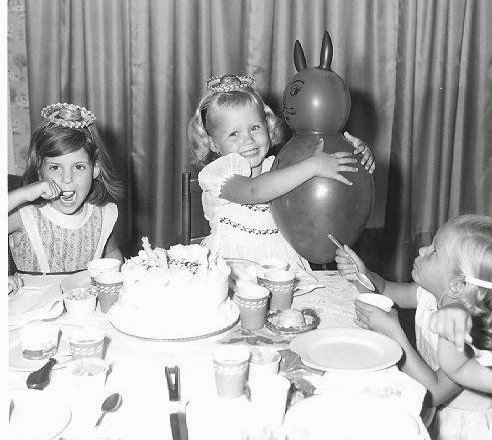
Three children celebrating a birthday with cake and balloons.

Today was my first in a new series of Brown Bag Lunches with the offices of Dr Cesar Lara. My topic (as the title above says) is The Benefits of Gratitude. I explain how being grateful affects our body, our mind, even our career! Then I offer ways that you can increase gratitude in your life.

Stained glass window with colorful floral design.

When Nostalgia Turns into Noise

Watching The Sound of Music Live! completely captivated me. Immediately, the performance carried me back to childhood — to Julie Andrews as Fraulein Maria, to singing in the woods near my home, and to imagining I belonged to the Von Trapp family. It felt magical then, and once again, it felt magical now.

However, after I opened social media, the tone shifted.

Within minutes, celebration turned into criticism. Instead of simply enjoying the performance, people began dissecting it. Soon, comment sections filled with sharp opinions, comparisons, and rebuttals. As a result, what began as joy quickly felt heavier.

That shift caught my attention.

The Cost of Constant Critique

At one time, being a professional critic seemed glamorous. After all, who wouldn’t enjoy attending Broadway shows, previewing films, or dining at fine restaurants for a living?

In reality, though, critics do far more than enjoy experiences. Rather than absorb the moment, they analyze every detail and evaluate every nuance. Ultimately, they search for flaws.

Over time, that focus shapes perception.

When we train our minds to look for what is wrong, we inevitably find it — even in something beautiful.

Why We Gravitate Toward the Negative

Naturally, the brain scans for problems. Originally, that instinct protected us. Today, however, constant exposure to negativity — through news cycles, online commentary, and everyday conversation — reinforces that pattern.

Each day, headlines highlight economic strain and political conflict. Meanwhile, people I care about face health challenges, relationship stress, and personal uncertainty. In contrast, music, art, literature, and even a shared meal offer relief.

They create space to breathe.

Yet when criticism invades even those spaces, it drains that relief and redirects attention back to what feels broken.

Choosing Gratitude Instead

Of course, criticism has its place. Nevertheless, I feel grateful that it is not my role to search for flaws.

Instead, I consciously choose to direct my attention toward what works.

In my own life, I practice appreciation and gratitude intentionally. As I strengthen that habit, I notice that resilience grows. Consequently, that shift in attention not only steadies me personally but also allows me to bring calm, grounded presence to my clients.

Attention is powerful.

Both criticism and gratitude expand with practice.

Personally, I know which one I want to cultivate.

Lake with trees and gratitude quote.


Thanksgiving commemorates a harvest festival celebrated by the Pilgrims in 1621, and is held in the US on the fourth Thursday in November. It is a day set aside to give thanks for the bounty of the previous year, although it often ends up with feasting, football and now even shopping for the upcoming holidays.  Hence, we have one day a year to express our gratitude, between these other activities. Yet, is one day a year, during commercial breaks really enough? 
 
Research has found that grateful people are more likely to:
 
-Take better care of themselves physically and mentally
-Engage in more protective health behaviors and maintenance
-Get more regular exercise
-Eat a healthier diet
-Have improved mental alertness
-Schedule regular physical examinations with their doctor
-Cope better with stress and daily challenges
-Feel happier and more optimistic
-Avoid problematic physical symptoms
-Have stronger immune systems
-Maintain a brighter view of life
 
So, perhaps a daily flexing of the gratitude muscle is in order. I call it a muscle to show you that gratitude is not just a feeling, if it was, we would feel it all the time. Gratitude is the combination of being gracious and one’s attitude. I want all the benefits listed above, so I decided to start daily rituals of gratitude. Daily reminders of what is right in my life as opposed to running the constant treadmill of more, more more!
 
Here are simple ways you can join me in this practice. 
 
Good Morning and Thank You!   Before you even get out of bed, take 2 minutes to reflect on whoever or whatever you are grateful for. Just a silent thank you will set the tone of your day to come.
 
Say Thank You.  Whenever someone does something nice, say thank you. Mean it. No matter how small, recognize the kindnesses in your life.
 
Write a handwritten note of thanks. How many handwritten notes have you gotten lately. If you are like most people, not many. Texting and email has replaced the art of the written note. Yet, just send out one note a day and see how good you feel. It doesn’t have to be long or fancy, after all it is the thought that counts. (Especially for you!) It can even be a note of thanks left on the desk of a co-worker or written on a bill along with the payment.
 
List 3 reason for gratitude at the end of your day.  Keeping a gratitude journal is easy when it is only 3 reasons at the end of the day. On the days you feel less than grateful, you have your journal as a reminder of the good things in your life.
 
As always, feel free to drop by my website to listen to a free audio.
 
Please, leave anything you do to enhance your attitude of gracious receiving in the  comments below. 

Child kneeling in prayer with gratitude

What qualities would you like to be remembered for? When you think about your personal legacy, consider the impact you hope to leave behind.

Loving. Friendly. Creative. Steadfast. Warm-hearted. Reliable. Humorous.

What is it for you?

Your legacy is not created at the end of life — it is shaped daily through the way you live, think, and treat others. The qualities you practice today quietly become the lessons future generations learn from you.

So begin now.

Practice the Qualities You Want to Leave Behind

Monitor your thoughts and treat yourself with compassion. The relationship you have with yourself becomes the model for how you relate to the world.

Take time each day to feel gratitude for life’s simple pleasures — morning light, shared laughter, a peaceful moment of breathing. Research from the Greater Good Science Center at UC Berkeley shows that practicing gratitude improves emotional well-being, resilience, and overall life satisfaction.

Breathe deeply.
Just two minutes of focused breathing each day teaches your nervous system how to return to calm and clarity.

Move your body daily. Exercise strengthens not only your muscles but also your emotional resilience and mental well-being.

Protect your rest. Turn off the television, silence the endless scrolling, and allow your mind the quiet it needs to restore itself.

Eat mindfully. Notice the flavors, textures, and aromas of your food. Nourishment is both physical and emotional.

Release clutter — in your home and in your mind. Clutter occupies space in your environment and in your thoughts.

Let go of guilt. Guilt often lives in the past and rarely helps us grow. Choose learning instead of self-punishment.

Find reasons to smile and laugh. Joy is contagious and leaves a lasting imprint on those around you.

Follow your spiritual path, whatever form that takes for you. Meaning gives direction to a life well lived.

Your Legacy Begins Today

You can evolve into the person you aspire to be.

What you practice becomes what others witness.
What others witness becomes what they remember.

So ask yourself:

What will your legacy be?


Close-up of bright yellow daisies in full bloom.

I know it is a bit late for Easter, unless of course you celebrate Greek Easter. I managed to post this on facebook and left my blog out. Mea culpa. Anyway, I do hope you enjoy this, it is brief and relaxing.

Frosted glass window with wooden frame.

I was fascinated by this window. It let the light in, but because it was alabaster instead of glass, you could not see through it. It just seemed like an appropriate metaphor for life. How often do we see the light without seeing the full picture?

It takes a certain amount of faith to believe that even in some of our most trying times, things will work out. We determine how we want things to go and when they don’t seem to go our way, we worry that nothing will ever be OK again. We tend to determine that everything is working against us. If we stopped to review our past, that is not usually the case.

The trials I have experienced in my life are what helped me become the person I am today. In the past, during those trials, I could not see that. I ranted and raved, to no avail. Thank heavens, I did not get my way at the time. It is now my sincere desire to recall those lessons when I am faced with an obstacle.

Recently, while sitting in quiet contemplation at St Michael’s Shrine, I realized how often I have gone there to request a change. Prayer for me had become constant “I wants”. Even if the wants were for others, it was still always a want. Gratitude seemed to be missing from my prayers. I began in that moment to focus on gratitude. When things get difficult, I recall my gratitude prayers and somehow, I become calm with the knowledge that once again I will be fine.

I may not see the answers or the outcomes, but I do see the light.

Three red-orange rectangles of varying sizes on a white background.

Yesterday was the American holiday, Thanksgiving. I hope all who celebrated had a fabulous day with plenty to be grateful for.

We can all be grateful we weren’t at this Turkey Drop.

Have a great and relaxing weekend. Take a moment to reflect on what you are grateful for and imagine how you desire your life to be. Then, begin to allow that life to become your reality.

Psychology book with mental health notes.

This is actually more like late Monday afternoon musings. Sometimes life has a way of flowing different than our plotted course. I learned long ago to stop fighting the current at those times and just flow with it.

Thanks to one and all who wished my son a happy birthday. He smiles every time I show him another comment. He won’t admit it, but I know at some level he feels important that even people he doesn’t know wish him well.

This week I have a special post coming up from an author friend of mine. She has posted once before and I hope to have even more from her. Her name is Patricia Dowdy and she is the most gentle soul. I am pleased as can be that she will again be sharing her talents with us.

Have a blessed day and evening one and all. Take a moment in the midst of all that goes on around you to think about something you are grateful for. I know it isn’t always easy to think of such things, some times it feels darn near impossible. But, if you can find just one thing, for that brief moment, you can begin your way to peace again.

1 2