inner peace

Woman applying hand sanitizer with a spray bottle.
 

Overcoming fear and anxiety is something many of us struggle with, often without realizing how much it quietly shapes our thoughts, decisions, and sense of inner peace.

St. Patrick’s Day is here and celebrations are in full swing — from turning rivers green (famously in Chicago and even locally the Hillsborough River) to parades and parties. According to tradition, St. Patrick drove the snakes out of Ireland. However, historians agree Ireland never had snakes. In biblical symbolism, snakes represented evil, and Pagans were often viewed the same by early Christians. The story is now widely understood as a metaphor — not for reptiles, but for beliefs, fears, and influences that were driven away or transformed.

I like to use this metaphor in a very different way.

I’m not in any rush to drive Pagans — or any other group of people — out of my life. But anything that stands in the way of inner peace? That can leave.

Fear as an Inner Snake

Ironically, I once had a horrid fear of snakes myself. Through self-hypnosis and gradual exposure, I was able to release that fear entirely. That experience taught me something important: fear is learned — and what is learned can be unlearned.

So what are the “snakes” that most of us are actually dealing with?

Fear tops the list.

Fear can rob us of inner peace almost instantly, the moment it becomes a thought. Anxiety, fear-based thinking, and avoidance often work together in subtle but powerful ways.


How Anxiety and Avoidance Work Together

We all have a continuous inner voice. When we are anxious or fearful, that voice can become loud, repetitive, and relentless. This self-talk directly affects our emotions and behaviors. When we start telling ourselves things that don’t line up with reality, anxiety grows.

Often, our first instinct when fear appears is avoidance. When danger is real, avoidance can be appropriate. But when fear is irrational, avoidance only strengthens anxiety.

Avoidance “works” in the short term — we feel immediate relief. Unfortunately, that relief trains the brain to believe avoidance is the solution. Over time, fear begins to control larger and larger portions of our lives. Avoidance never makes fear go away; it teaches fear where our boundaries are.

This is why overcoming fear and anxiety requires awareness, not escape.


Reframing Fear to Restore Inner Peace

Many people naturally focus on the negative side of any challenging situation. When we focus on what could go wrong, we resist taking action and become stuck. The more we focus on loss, the more anxiety we create.

A powerful way to begin reframing fear is to bring it into the open.

Start by writing down your fears. In each situation that leaves you hesitant or anxious, ask yourself:

  • What am I afraid will happen?

  • How likely is that outcome, really?

  • If I take this fear to its extreme, what are the actual odds?

Then, on a separate sheet of paper, list the benefits of moving forward. Be specific. Fear amplifies negatives and minimizes positives, so you may need to consciously emphasize what could go right.

When you compare these two lists, fear loses its grip — and balance returns.


A Real-Life Example of Overcoming Fear and Anxiety

Recently, I worked with a woman experiencing frequent anxiety attacks. The onset of her anxiety coincided with starting a job search. As we talked, her fears surfaced clearly.

When we explored those fears fully, she realized she was unlikely to end up homeless or alone on the streets of Tampa Bay — the scenario her anxiety had quietly been suggesting.

As we reframed the situation and explored what could go right, her anxiety began to dissipate. She chose to move forward with her job search instead of letting fear dictate her choices.

Her snakes were driven away.


Channeling Your Inner St. Patrick

Take a moment today to channel your inner St. Patrick. Ask yourself:

  • What fears have been lingering too long?

  • Where has avoidance quietly been making decisions for you?

  • What inner snakes are ready to leave?

Breathe in calm. Picture the rolling green hills of Ireland. Imagine fear loosening its grip as clarity returns. Then ask yourself what beauty might be waiting for you on the other side of courage.

Overcoming fear and anxiety isn’t about forcing positivity — it’s about seeing clearly.

And sometimes, that’s all it takes to restore inner peace.

overcoming fear
 
Woman with curly blonde hair in a pink top, looking to the side.

Keeping up with the Joneses used to mean bigger houses, newer cars, and more lavish parties. That version of comparison culture has quietly faded. After books like The Millionaire Next Door and the very real sight of foreclosures lining our neighborhoods, many people shifted away from status symbols and toward simpler, more meaningful experiences. Potluck dinners replaced extravagant gatherings, and connection began to matter more than appearances.

Yet comparison did not disappear — it simply moved online.

Comparison moved online

Today, keeping up with the Joneses on social media has become its own full-time emotional drain. Platforms like Facebook, Instagram, and X invite us to measure our lives against carefully curated highlights of others. Scroll long enough and it can feel as though everyone else is attending more events, eating trendier foods, achieving greater success, and living a more inspired life than you are.

Even business owners feel the pressure. One person posts about how busy they are, and suddenly three competitors feel compelled to announce how much busier they are. Concerts, theater, travel, and “once-in-a-lifetime experiences” are presented as weekly occurrences rather than special moments. Meanwhile, even donut shops feel obligated to post motivational quotes instead of reminding us how delicious their baked goods truly are. We have created a new kind of Joneses — measured not in homes or cars, but in likes, shares, comments, followers, and perceived relevance.

This social media comparison trap quietly conditions us to believe that our worth depends on visibility and validation. The more connections, responses, and reactions we receive, the more successful and fulfilled we are supposed to feel. And when those numbers fall short, self-doubt creeps in.

Perhaps it is time to step back.

What would happen if you put down the phone, tablet, or device — even for a few minutes a day — and reconnected with the world around you? Walking outside without headphones, listening to birds or the rhythm of your own footsteps, can be surprisingly grounding. Presence has a way of calming the nervous system in ways social media never will.

What if you stopped comparing your life to your 5,000 “friends” and allowed yourself to simply be you? No performance. No metrics. No competition.

I wonder who we might become then.

Christmas tree with colorful lights and gifts.
Wishing all a day of true peace, joy and love. May those begin within and extend to all you encounter.
Stained glass window with colorful floral design.

When Nostalgia Turns into Noise

Watching The Sound of Music Live! completely captivated me. Immediately, the performance carried me back to childhood — to Julie Andrews as Fraulein Maria, to singing in the woods near my home, and to imagining I belonged to the Von Trapp family. It felt magical then, and once again, it felt magical now.

However, after I opened social media, the tone shifted.

Within minutes, celebration turned into criticism. Instead of simply enjoying the performance, people began dissecting it. Soon, comment sections filled with sharp opinions, comparisons, and rebuttals. As a result, what began as joy quickly felt heavier.

That shift caught my attention.

The Cost of Constant Critique

At one time, being a professional critic seemed glamorous. After all, who wouldn’t enjoy attending Broadway shows, previewing films, or dining at fine restaurants for a living?

In reality, though, critics do far more than enjoy experiences. Rather than absorb the moment, they analyze every detail and evaluate every nuance. Ultimately, they search for flaws.

Over time, that focus shapes perception.

When we train our minds to look for what is wrong, we inevitably find it — even in something beautiful.

Why We Gravitate Toward the Negative

Naturally, the brain scans for problems. Originally, that instinct protected us. Today, however, constant exposure to negativity — through news cycles, online commentary, and everyday conversation — reinforces that pattern.

Each day, headlines highlight economic strain and political conflict. Meanwhile, people I care about face health challenges, relationship stress, and personal uncertainty. In contrast, music, art, literature, and even a shared meal offer relief.

They create space to breathe.

Yet when criticism invades even those spaces, it drains that relief and redirects attention back to what feels broken.

Choosing Gratitude Instead

Of course, criticism has its place. Nevertheless, I feel grateful that it is not my role to search for flaws.

Instead, I consciously choose to direct my attention toward what works.

In my own life, I practice appreciation and gratitude intentionally. As I strengthen that habit, I notice that resilience grows. Consequently, that shift in attention not only steadies me personally but also allows me to bring calm, grounded presence to my clients.

Attention is powerful.

Both criticism and gratitude expand with practice.

Personally, I know which one I want to cultivate.

Person sitting peacefully by water learning to slow down and relax.

Slow Down — Don’t Move So Fast

Learning to slow down has become one of the greatest challenges of modern life. As Simon and Garfunkel once sang, many of us move too fast to truly enjoy where we are.

The desire to slow down is not new. For as long as humanity has existed, people have searched for ways to live with more ease and less pressure. Ironically, the more time-saving technology we create, the busier we become.

Today, many people watch television while scrolling online. Others walk down the street talking on the phone. Music plays while we drive, and messages are checked at stoplights.

We are always doing something.


The Hidden Cost of Constant Busyness

Modern work life adds another layer of pressure. Economic concerns and productivity expectations push many people to use every waking moment trying to accomplish more.

According to the American Psychological Association, workplace stress affects millions of Americans each year.

However, workplace stress is not uncommon, and how we deal with it can have a significant impact. Chronic stress affects both mental and physical health and carries significant costs for individuals and businesses alike.

Perhaps Simon and Garfunkel were right.

It is a conscious choice to slow down. It isn’t always easy, but it leads to deeper appreciation, better health, and greater happiness.


7 Simple Ways to Slow Down and Reduce Stress

1. Do Less

It is difficult to slow down when you are trying to do everything.

Ask yourself:
Is this truly necessary?

Focus on what matters most and let go of the rest. Build space between tasks and appointments so you can move through your day with intention instead of urgency.


2. Be Present

Slowing down requires more than moving slowly — it requires awareness.

When your mind drifts into the past or worries about the future, gently return to the present moment.

Notice how our pets live. They are not worried about tomorrow’s meal; they simply want to share this moment with you.

Observe your surroundings. Notice your actions. Fully experience now.

Presence takes practice — and it is profoundly worthwhile.


3. Disconnect

If you carry a smartphone everywhere, experiment with turning it off occasionally — or leaving it behind.

Constant availability creates constant interruption. When we disconnect from devices, we reconnect with ourselves.

Even short breaks from technology can dramatically reduce stress levels.


4. Appreciate Nature

Many of us move between home, car, and office without truly experiencing the outdoors.

Step outside intentionally.

Feel fresh air. Notice water, greenery, sunlight, and wind. Walk, swim, kayak, or simply sit quietly in nature.

Even a few minutes outdoors each day can reset the nervous system.


5. Eat Slowly

Rushing meals disconnects us from nourishment and often leads to overeating.

Before eating, take three deep breaths.

Notice flavors, textures, and aromas. Eating slowly helps you feel satisfied sooner — and enjoy your food more deeply.


6. Allow Yourself to Daydream

Daydreaming is often misunderstood as unproductive, yet research shows it enhances creativity.

When stress decreases, the brain accesses deeper problem-solving and imaginative pathways.

Close your door. Turn off electronics. Sit quietly for five to ten minutes and let your mind wander.

Your next insight may arrive when you finally pause.


7. Breathe

When life speeds up, pause.

Take a slow, deep breath.
Then another.

Feel the air entering your body and stress leaving with each exhale.

Notice how babies — and animals — breathe naturally through the diaphragm, their bellies gently rising and falling.

Return to that natural rhythm whenever you need to slow yourself down.


Slowing Down Is a Choice

Life rarely slows itself.

We must choose it.

And when we do, we often rediscover something simple and profound:

Peace was never missing — only our attention was.


If you want to take a moment right now to slow down and relax, visit my website here for the free audio: Serenity 

Person sitting peacefully by water at sunrise, symbolizing slowing down and reducing stress.

A calm sunrise scene near water representing mindfulness, relaxation, and the intentional choice to slow down and reconnect with the present moment.


Silver trophy engraved with Angel Award 2016 for Debbie Lane.
Tampa made a top 10 list, in fact it made it to the number one spot! But, not a list we like to brag about around here. 
 
Sperling’s BestPlaces, a research firm specializing in livability rankings, has released its new study of major cities with the most and least stress.  The study analyzed a variety of factors associated with stress, including suicide, divorce, crime, joblessness and lengthy commuting. 
With that in mind, I decided to do my part to help reduce the stress. It may not be the cure, but if it even helps change one attitude, I believe the butterfly effect may begin.

 Click Here For Calm

Be sure you have a few minutes to enjoy, uninterrupted. Then please, share with anyone you might know that could use a moment of comfort. 

Debbie Lane speaking to working women of tampa bay

Fear often arrives quietly — not as danger, but as hesitation, self-doubt, or the feeling of being stuck.

During my presentation at the Working Women of Florida Conference, I spoke about how fear can be gently unraveled rather than fought. This hypnosis experience was recorded to help listeners begin releasing fear safely and naturally.

👉 If you would like to read more about the conference and the principles behind this work, visit:
Overcoming Fear: The 5 A’s to Move Beyond Fear and Take Action

Take a few moments, get comfortable, and allow yourself to simply listen.

This free hypnosis recording helps release fear patterns and emotional tension using gentle clinical hypnosis techniques. Ideal for anxiety, confidence building, and overcoming limiting beliefs.

How This Hypnosis Helps Untangle Fear

Fear is rarely about the situation itself.
It is often connected to past experiences, expectations, or protective patterns created by the subconscious mind.

Hypnosis allows the mind to:

  • release outdated fear responses
  • create emotional safety
  • reconnect with confidence and clarity

If fear is limiting your life, professional hypnosis can help you move forward safely and comfortably.

Schedule a session at WisdomHypnosis.com

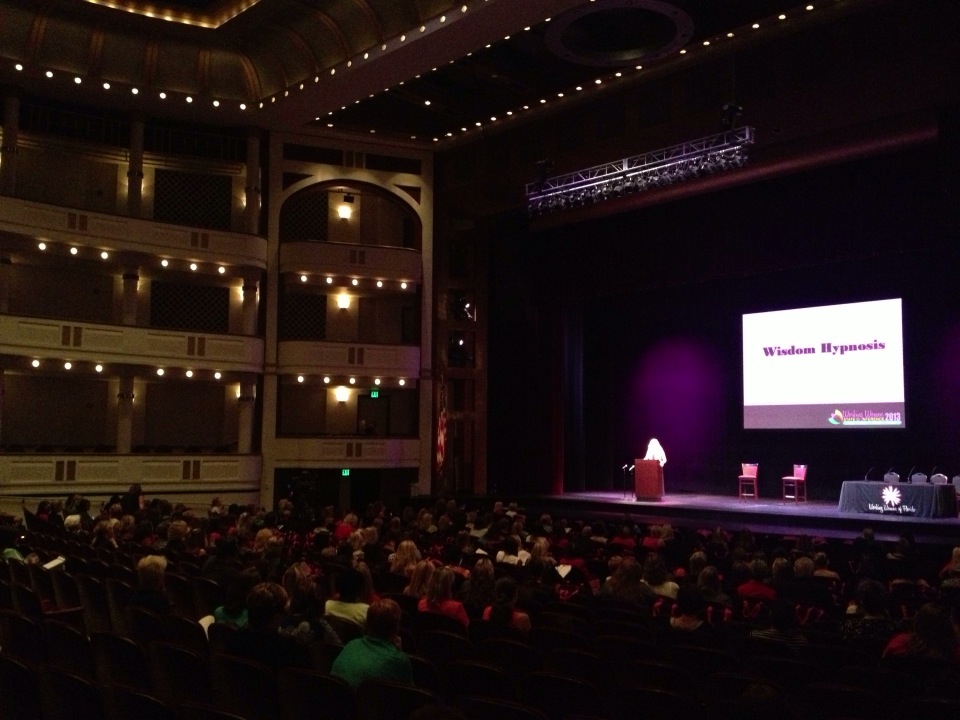
Audience watching speaker, Debbie Lane of Wisdom Hypnosis on stage in theater.

I recently had the honor of speaking at the Working Women of Florida conference held at the Mahaffey Theater. Standing on stage before more than 400 women and discussing overcoming fear was both humbling and inspiring. The conference was held in St. Petersburg, Florida, serving women from across Pinellas County, Clearwater, Palm Harbor, Dunedin, and Tampa Bay.

The energy, encouragement, and connection shared during those two days reminded me why helping people move beyond fear is work I deeply love.

During the presentation, I introduced what I call The 5 A’s of Overcoming Fear — simple but powerful principles that help transform fear into forward movement.


The 5 A’s of Overcoming Fear

1. Acknowledge

The first step in overcoming fear is acknowledgment.

Ask yourself:
What does this fear truly represent?

Often fear is symbolic rather than literal. For example, I once believed I had a fear of driving. In reality, the fear was connected to success and the life changes success might bring.

Once the true fear was acknowledged, moving forward became possible.


2. Awfulize

This may sound unusual, but intentionally imagining the worst-case scenario can reduce fear’s power.

When you “awfulize” a situation, you often discover:

  • The outcome is not as catastrophic as imagined, or

  • You already possess the skills needed to cope.

Fear loses intensity when examined realistically.


3. Appreciate

Fear once served a purpose.

At some point, it protected you, comforted you, or helped you survive a difficult situation. Appreciating its past role allows you to release it without judgment.

Just as childhood habits eventually fall away, outdated fears and limiting beliefs can be outgrown.


4. Ask (Afform)

The questions we ask ourselves shape our emotional experience.

Instead of asking:
“What if this goes wrong?”

Try asking:
“What if this goes right?”

This approach aligns with the concept of Afformations, developed by Noah St. John, which focuses on empowering questions that guide the mind toward solutions and possibility.


5. Act

True overcoming of fear happens through action.

Understanding is important — but experience creates transformation.

Deciding you are no longer afraid of elevators is one thing. Riding in one is the victory.

Take small steps. Find supportive people. Celebrate progress.

Action turns insight into confidence.


Creating a Life Beyond Fear

Overcoming fear is not about eliminating fear completely. Instead, it is about learning to move forward even when fear appears.

Today is a perfect day to begin creating the life you desire — one step, one choice, and one courageous action at a time.

I would love to hear your stories of courage and growth. Please share your successes in the comments so others may be inspired as well.

Child kneeling in prayer with gratitude

What qualities would you like to be remembered for? When you think about your personal legacy, consider the impact you hope to leave behind.

Loving. Friendly. Creative. Steadfast. Warm-hearted. Reliable. Humorous.

What is it for you?

Your legacy is not created at the end of life — it is shaped daily through the way you live, think, and treat others. The qualities you practice today quietly become the lessons future generations learn from you.

So begin now.

Practice the Qualities You Want to Leave Behind

Monitor your thoughts and treat yourself with compassion. The relationship you have with yourself becomes the model for how you relate to the world.

Take time each day to feel gratitude for life’s simple pleasures — morning light, shared laughter, a peaceful moment of breathing. Research from the Greater Good Science Center at UC Berkeley shows that practicing gratitude improves emotional well-being, resilience, and overall life satisfaction.

Breathe deeply.
Just two minutes of focused breathing each day teaches your nervous system how to return to calm and clarity.

Move your body daily. Exercise strengthens not only your muscles but also your emotional resilience and mental well-being.

Protect your rest. Turn off the television, silence the endless scrolling, and allow your mind the quiet it needs to restore itself.

Eat mindfully. Notice the flavors, textures, and aromas of your food. Nourishment is both physical and emotional.

Release clutter — in your home and in your mind. Clutter occupies space in your environment and in your thoughts.

Let go of guilt. Guilt often lives in the past and rarely helps us grow. Choose learning instead of self-punishment.

Find reasons to smile and laugh. Joy is contagious and leaves a lasting imprint on those around you.

Follow your spiritual path, whatever form that takes for you. Meaning gives direction to a life well lived.

Your Legacy Begins Today

You can evolve into the person you aspire to be.

What you practice becomes what others witness.
What others witness becomes what they remember.

So ask yourself:

What will your legacy be?


Two doves facing each other in sky.

This morning is peaceful, before the big Fourth Of July celebrations coming up here in the states this Friday. There are concerns and demands today, as every day. Some days things flow automatically, some days we have to stop and re-frame our thoughts to allow for the free flow.

So today, I am going to share a simple way to create the free flow in your day.

Take a moment and sit comfortably. Really become comfortable with your surroundings, allow your attention to wander for a moment. Slowly begin to turn your attention to your body. Feel the space your body occupies, imagine you can sense the space from the top of your head to the bottoms of your feet. Feel and imagine your body is in perfect harmony as all your organs perform their jobs perfectly. Breath in harmony, exhale anything that is unnecessary in this moment.

As you breathe in, notice the sounds your body is creating, heart beat, air flowing in and out of your lungs, whatever you hear. Then begin to notice the sounds around you, whatever they may be, just as easily release them and allow yourself to hear the quiet that is beyond. Notice whatever aromas surround you. Feel your skin, the temperature on of different parts of your skin, feet, hands, neck, etc. Then as you feel yourself quieting down, breathe in with the thought, “I live in peace, I walk in peace, I am peace”. Exhale the thoughts of “peace, be still, peace”. Continue for two minutes.

Repeat through out the day as needed.
Now, go enjoy your day in peace!

1 2